
The FRESFARM FoodPrints Approach to Food Education
In this section, learn how the FoodPrints’ program approaches food education with an emphasis on sensory exploration and a non-pressured approach to eating.
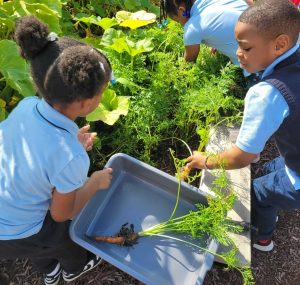
FRESHFARM FoodPrints educators encourage students to use their 5 senses as they explore new foods, to consider how food looks and how it makes them feel, and to be involved in all parts of preparing a meal from harvesting to cooking to eating food.

When cooking and eating with kids, it’s important to create a fun and relaxed environment. At the same time, it is important to be intentional with the language we use around food:
> Encourage sensory exploration: even if they aren’t ready to taste it, kids can use their other senses to engage with a new food or ingredient. Sensory exploration with food builds familiarity and comfort over time without pressure.
> Model non-judgmental, descriptive language to describe new foods: Rather than “good” or “bad,” comment on the food’s color, shape, texture, smell, etc.
> Promote respectful food exploration: remind kids that it’s okay if their taste buds aren’t ready for something yet, but it’s important not to “yuck” someone else’s “yum.” Emphasize that it is ok not to like a food, but it’s important to be respectful to those around us who prepared the food or are enjoying it.
> Try your best to steer clear of moral labeling: avoid using polarizing descriptors like “good” or “bad,” or even “healthy” and “unhealthy,” which can make kids feel bad about their food choices that they have little control over.
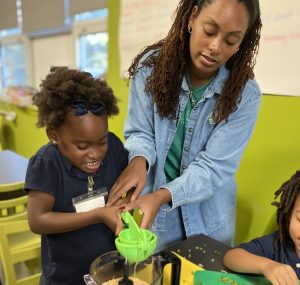
Teaching kids about seasonality helps them understand how seasonal eating is connected to the natural world; the foods we grow locally change with the seasons. By highlighting that certain foods grow in fall, winter, spring, and summer, we can spark curiosity around trying new foods and encourage excitement around eating a variety of fruits and vegetables.
Watch the video Seasons of the Garden: In this video, one of our FoodPrints teachers explains the concept of seasonality and why we harvest and eat different foods from our garden during different seasons.
The following lessons demonstrate our approach to nutrition education:
Eating the Whole Grain: The purpose of this lesson is to help students understand the difference between whole grains and refined grains. They will investigate and dissect stalks of wheat, then grind their own flour with a flour mill. By the end, students will be able to explain how whole grains differ from refined grains and recognize that whole grains contain all parts of the grain—and all the nutrition they provide.
- Grinding Wheatberries into Flour: Using a manual or electric grinder, students begin by grinding wheat berries into a fine powder. Once ground, they can sift a portion of the flour through a fine mesh strainer to remove as much of the germ and bran as possible. This creates a lighter, more refined product that can be compared side-by-side with the unsifted whole wheat flour. This activity provides a way to observe and feel the difference between whole wheat and “white” flour.
Growing Vegetable Soup: This lesson aims to familiarize students with a variety of different vegetables that can grow in the school garden. The supporting activities allow students to choose vegetables they would like to plant, carefully observe a few seasonal vegetables, and celebrate the variety of vegetables they can eat.
- Growing Vegetable Soup Drawings: Students will carefully observe and explore a few different winter vegetables. Encourage students to notice the shape and size of the vegetable, to listen to any sounds when tapped or gently shaken, and observe the texture and smell of each vegetable. From their observations, they will make artistic drawings of the produce items. If possible, use paint or oil pastels to make the artwork similar to the art in the connected text, “Growing Vegetable Soup.” At the end of the activity, the individual drawings can be combined into a collage to display in the classroom.
Eating the Rainbow: In this lesson, students explore the ways that eating a rainbow of colorful fruits and vegetables helps our bodies. After sorting produce by color, creating a rainbow poster illustrating different colored produce, and searching the garden for examples of colorful produce, students connect each color to its benefits and celebrate the variety on their plates.
- I Can Eat a Rainbow: Show students a variety of produce of different colors and a chart with the colors of the rainbow listed. Students will then work together to sort the produce into different colors and place them on the chart. It is best to use a wide variety of produce of different colors, including items that are in season and pictures of produce. They can then complete the I Can Eat a Rainbow worksheet (in the lesson), naming and drawing an example for each color.
Nutritious and Delicious: The purpose of this lesson is for students to understand the value of eating food that is both nutritious and delicious. Students will identify foods they consider to be nutritious and delicious and design a snack they would enjoy eating. They will also identify different nutrients found in FoodPrints recipes and taste some fermented foods that support digestion and help our bodies use nutrients in the food we eat.
- Prepare a Recipe: This lesson is a great opportunity to prepare a veggie-filled dish that students traditionally deem “delicious”. (Think: Kale Chips; Sweet Potato Quesadillas or “Beet It” Brownies.) Using recipes that students are already familiar with, you can introduce new vegetables in a fun and approachable way, showing that nutritious ingredients are in foods students already love.