2025 Annual Report

Meeting the Moment: A Year of Crisis Response and Resilience

I am delighted to present FRESHFARM’s 2025 Annual Report, my first as executive director. I joined FRESHFARM in August of 2025 and feel so privileged to be at its helm with such an exceptional team and vital mission. So many of us call the Washington, DC, region home, and this year, our community faced multiple crises, unexpected hardship, and tremendous uncertainty. Undeterred, the FRESHFARM team met these moments with diligence, urgency, and care. I’ve watched FRESHFARM activate and deliver at our markets, in classrooms and gardens, and through our food access programs. With support from partners, funders, and local governments, we showed up with rapid solutions across our Mid-Atlantic food system when people needed us most.

FRESHFARM entered the winter of 2025 under the trusted leadership of Interim Executive Director Jacquelyn Lendsey. I’m deeply grateful for Jacquelyn’s steady hand, principled guidance, and support for our staff and partners through a complex time. I also want to thank the FRESHFARM Board of Directors for the thoughtful decision to appoint interim leadership to ensure a seamless transition from Hugo Mogollon’s tenure as executive director.

The annual report that follows highlights the many instances when our team met the moment to fulfill our mission. The challenges of 2025 included the freezing of federal funding, soaring food costs, instability in SNAP (Supplemental Nutrition Assistance Program) benefits, increased ICE activity across the Washington, DC, metro area, a prolonged federal government shutdown, and a shrinking federal workforce. These changes strained farmers, families, and community organizations throughout our region. Through it all, FRESHFARM remained nimble, responsive, and community-centered.

This was a year of crisis response, and FRESHFARM weathered the storm thanks to the strength of our staff and systems, our network of local farmers and producers, and our community relationships. We adapted quickly to maintain access to fresh food, sustain farmer livelihoods, and continue offering transformative, joyful food and gardening education in DC public schools. We operated with entrepreneurial rigor to flow resources back into the people and places we serve.

Thank you for believing in a Mid-Atlantic food system that is equitable, resilient, and built to last. We are part of what keeps this region strong, vibrant, and an amazing place to live and work. I’m honored to share this work with you and am energized about what we will continue to build together as we prepare to celebrate 30 years in 2027!




Cat Oakar
Executive Director
2025 by the Numbers

FRESHFARM creates lasting change by tackling the most urgent challenges at every level of the food system. Our innovative programs transform how the Mid-Atlantic region grows, accesses, and learns about food. These 2025 metrics are powerful snapshots of how our mission impacts the entire regional food system and our local community.

26
FRESHFARM markets and farm stands hosted 1,010 market days and generated $30.4 million in sales for 237 farmers and food producers, overcoming widespread economic disruptions
$1.69M
in Produce Plus and Senior Farmers Market Nutrition Program benefits administered by FRESHFARM and redeemed by 14,360 community members during a time of increased regional food insecurity
$389K
in FreshMatch incentives and SNAP benefits spent at FRESHFARM farmers markets and farm stands, improving food access and increasing sales for regional farmers
30+
FRESHFARM Food Hub nonprofit and commercial partners generated $1.2 million in revenue for 48 local farmers, fueling the local food economy
21
FoodPrints schools served 8,000 students across 7 District wards, despite city-wide budget cuts
30K
pounds of produce procured by the Food Hub from local farmers for FoodPrints programming at DC public schools and early childhood education centers
$2.2M
raised from our network of donors and funders to strengthen our ability to anchor food access, distribution, and education programs across the region

Our Strategic Plan Objectives

Our Strategic Framework for Change

Our 2023-2028 Strategic Plan is built around two complementary goals: promoting a thriving food economy that prioritizes producers, consumers, and the environment; and giving all people and communities the agency and knowledge to access nutritious, local food.

FRESHFARM’s work touches four interconnected facets of the regional food system:

Production: Our network includes 237 farmers and food producers who sell their products at more than two dozen FRESHFARM markets and farm stands; 33% of these farmers and food producers identify as people of color.

Distribution: Our food distribution logistics solution, the FRESHFARM Food Hub, creates new revenue streams for small- and mid-sized farmers by serving as a local procurement partner for nonprofits, community organizations, and restaurants.

Consumption: An average of 16,000 people shop at our markets each week, and thousands redeem nutrition benefits and matching incentives each season. More than 8,000 children learn to grow, cook, and eat local produce in FoodPrints classrooms each year.

Recovery: We work with more than a dozen food recovery partners to recover unsold produce at our markets each week and also host six community composting drop-off locations.

FRESHFARM harnesses its unique ability to connect the dots across the regional food system by bringing together farmers, families, schools, and partners. Our work strengthens individual agency, cultivates thriving communities, and drives lasting systemic change, especially during times of upheaval and crisis. Grounded in a nimble, responsive, and deeply human-centered approach, FRESHFARM meets challenges head-on. In the sections that follow, you’ll see how these strategies came to life in a year that tested every corner of the regional food system.

Objective 1

Vibrant Economic Outlets

Increase the vibrancy of economic outlets for local agricultural products.

Farmers Markets: Economic Engines and Safe Community Spaces 

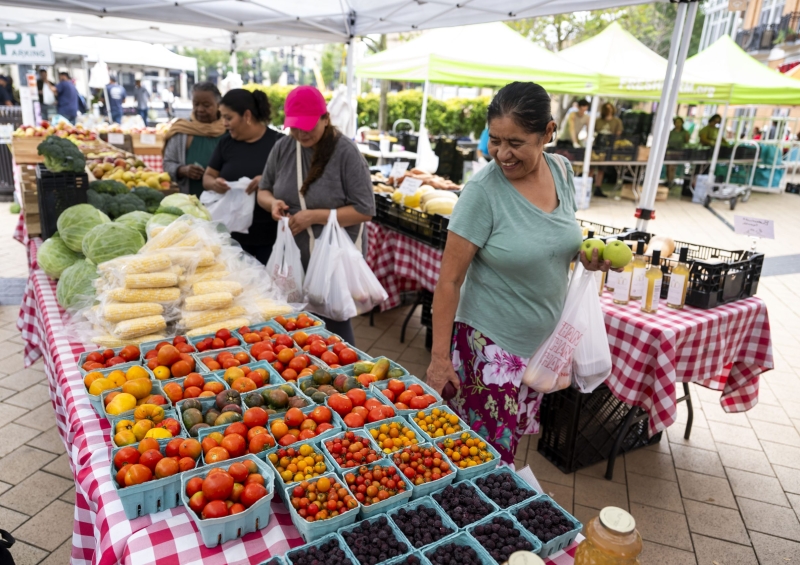
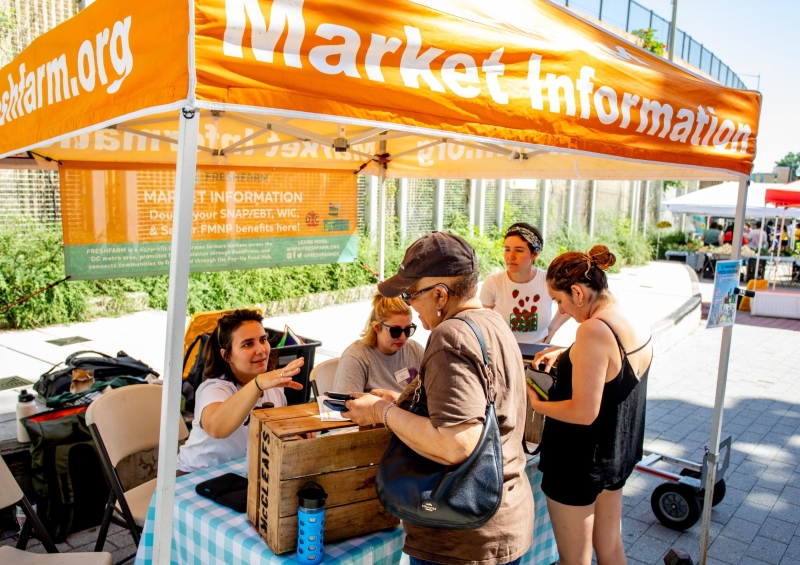
Throughout the challenges of 2025, our farmers markets and farm stands continued to function as vibrant direct-to-consumer outlets, places where local farmers and food businesses — who often operate on very thin margins — can sell their products and retain the majority of their sales. “I can say conclusively that we would not still be farming if it were not for farmers markets,” explained farmer and cheesemaker Melanie Dietrich Cochran of Keswick Creamery. To support Melanie and hundreds of other agricultural and food businesses, our markets had to be more than just sites of commerce. They also had to serve as inviting spaces where farmers, producers, and shoppers could gather reliably and safely. The federal funding freeze and prolonged government shutdown, increased ICE enforcement, and a federalized police force and National Guard presence in Washington, DC, created real strain. Against that backdrop, FRESHFARM’s markets and farm stands remained trusted spaces where local commerce and communities could thrive when other systems faltered.

Safety and operational readiness took on new urgency this year. We developed staff guidance on navigating ICE and federal agents at worksites, reinforcing our commitment to markets as welcoming public spaces for all. Amid this environment, markets remained joyful community hubs, hosting 47 local business sponsors, 115 nonprofits, and 27 performers. In the District, we offered Free Summer Meals to children ages 5 to 18 at six FRESHFARM locations, a placemaking effort that addressed missed meals during children’s summer break and ensured markets offered engaging activities for all ages.

FRESHFARM’s 26-market network generated $30.4 million in sales in 2025 (a 1.8% increase over 2024). Of this total, our food access programs accounted for $1.2 million in additional revenue for farmers and producers across the District, Maryland, Pennsylvania, Virginia, and West Virginia. That said, sales varied widely across markets, and many farmers and producers in our network faced rising costs. We are pleased with any growth in a difficult year, but the message is clear: communities must keep spending their grocery dollars locally to sustain robust, accessible markets for all.

The FRESHFARM Food Hub Evolution

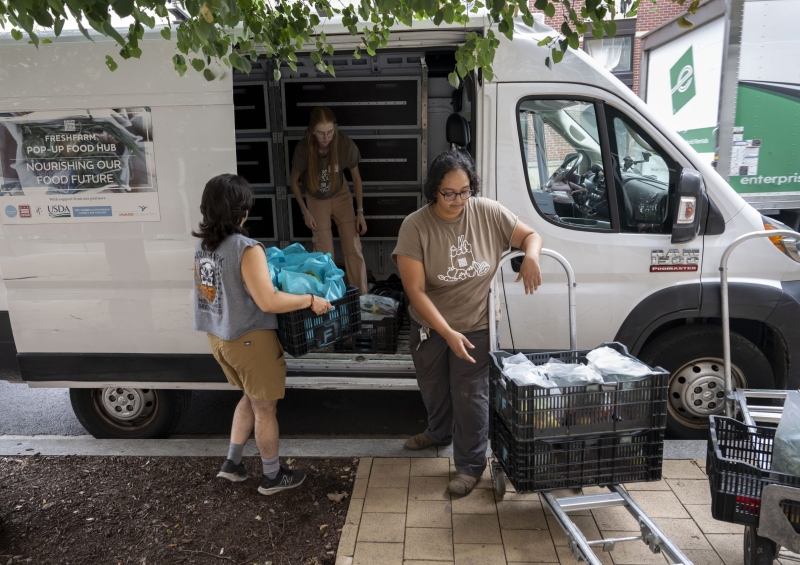
FRESHFARM’s Food Hub infrastructure — farmers, staff, delivery trucks, and our small warehouse — proved nimble and scalable in a crisis and emerged as a regional response tool to address food insecurity head-on. Many of our nonprofit community partners faced tighter budgets for purchasing local foods. FRESHFARM quickly identified alternative funding pathways to move produce from local farmers to 26 community partners at 89 unique sites at no or low cost, helping partners stretch their resources and mitigate growing food insecurity among neighbors across the Washington, DC, metro area. Moreover, these new funding sources supported small- and mid-sized farmers who rely on the Food Hub for revenue, 19% of whom identify as farmers of color.

Working with FRESHFARM Food Hub has been great. It has helped us grow and plan. We love being a part of it and helping families get fresh, local produce. A lot of families rely on food pantries, and those don’t usually offer fresh food.
– Ana Barajas, Barajas Produce

Objective 2

Equitable Food Access

Increase the level of convenient, equitable access to nutritious, local food in the Washington, DC region.

Preserving Equitable Food Access As Funding Shifted

Affordability was top of mind for families across the country, and FRESHFARM worked tirelessly to keep food on our community members’ tables as we faced funding cuts, SNAP disruptions, and the federal government shutdown. These efforts had real implications for our market shoppers, particularly those using FreshMatch, our incentive program that matches federal benefits dollar-for-dollar. As one Dupont Circle market SNAP shopper shared, “FreshMatch has been life-changing! We would never have access to these fresh foods without this assistance!”

In early 2025, we faced our first roadblock: the administration paused USDA GusNIP grants, the primary funding source for FreshMatch. To stretch our funding, in May, we made the difficult decision to reduce the daily FreshMatch cap from $30 to $10 per shopper, a fiscally responsible move for FRESHFARM, but a painful change for families already struggling.

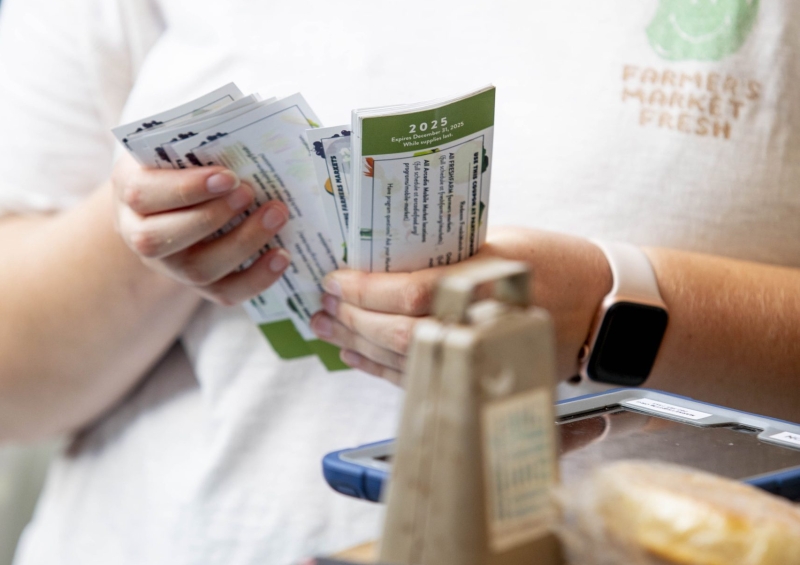
Thankfully, rapid, flexible support from the Robert I. Schattner Foundation allowed us to restore the daily cap to $30 in August. And in November, we expanded FreshMatch distribution by over 700% during the government shutdown, when SNAP benefits were under threat. We offered $30 in FreshMatch per market day to both furloughed federal workers and SNAP shoppers, regardless of whether they had benefits to spend. Support from the Bainum Family Foundation allowed us to continue offering deep discounts on our weekly Market Share CSA for SNAP shoppers, who make up more than one-third of the program’s subscribers. 

Leveraging Operational Know-How To Expand Regional Food Access

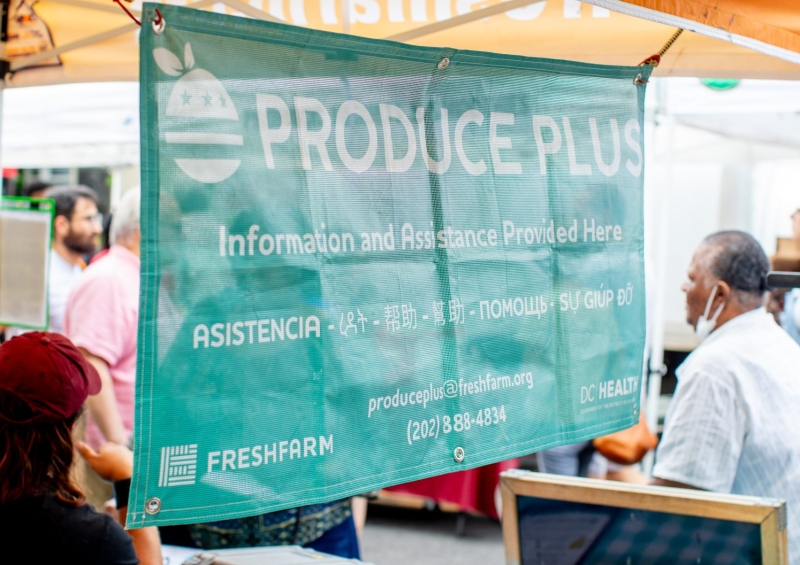
Building on decades of operational expertise, we continued to administer and improve food access programs on behalf of government agencies in 2025. In our fifth year managing Produce Plus, a DC Health food access program, we enrolled 11,100 participants, a 39% increase over 2024. Produce Plus shoppers spent $1.2 million on fresh fruits and vegetables at over 50 farmers markets, mobile markets, and farm stands across Washington, DC, a 22% increase over the previous year.

We continued administering the Senior Farmers Market Nutrition Program (SFMNP) across multiple jurisdictions. In our fourth year of managing DC SFMNP with Capital Area Food Bank for DC Health, we built on our digital Produce Plus platform to digitize SeniorFreshMatch incentives for the first time ever. This innovation increased spending power for seniors and extended incentives to non-FRESHFARM markets and farmers, generating more than $200,000 in redemptions across the District.

In our third year managing Virginia SFMNP in Fairfax and Loudoun Counties, we implemented a new, statewide, digitized platform and saw a 192% increase in redemptions over the previous year, with funds flowing directly to Virginia-based farmers.

Together, these programs illustrate a defining FRESHFARM strength: we modernize systems, build scalable infrastructure, and ensure that public investments translate into meaningful, dignified access for consumers while supporting the farmers who sustain our regional food economy.

I am a living testimony. Come November, it will be year five that I’ve been diabetes free, no insulin, no pills. And it’s because of Produce Plus. I changed my eating habits. I eat more vegetables, like vegetables I never thought I would eat.
– Produce Plus shopper and Market Champion

Objective 3

Food Education

Sustain and grow meaningful food education that increases consumption of nutritious, local food.

Maintaining Food and Gardening Education 

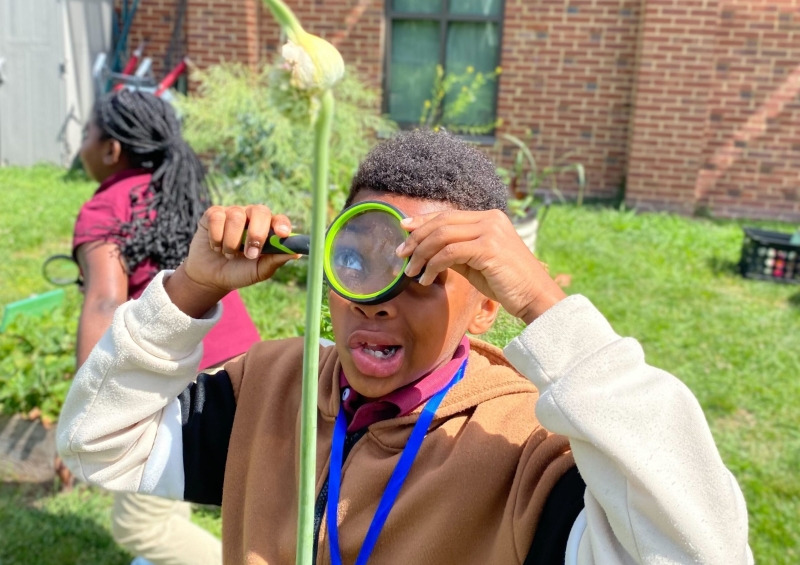
FoodPrints remained a steady, resilient presence in our Washington, DC, schools while uncertainty spilled into other aspects of everyday life in 2025. FoodPrints has always gone beyond lessons; it is a foundation for community and education connections at all of our partner schools. “Students who struggle in traditional classroom settings often thrive during FoodPrints, demonstrating leadership, curiosity, and perseverance,” noted an Amidon-Bowen Elementary School teacher. “The program builds confidence, increases engagement, and helps students make meaningful connections between what they learn in the classroom and the real world.”

As we entered FoodPrints’ 20th anniversary (2025–2026 school year), the powerful role it plays in our school communities felt especially resonant. When budgets tighten and external supports become less reliable, experiential education is often among the first programs to be cut. In 2025, we proved the opposite. Meaningful food education that links hands-on gardening, cooking, and eating to science, math, and social studies is a durable investment in student well-being and lifelong health, as recognized by so many of our stakeholders and city leaders.

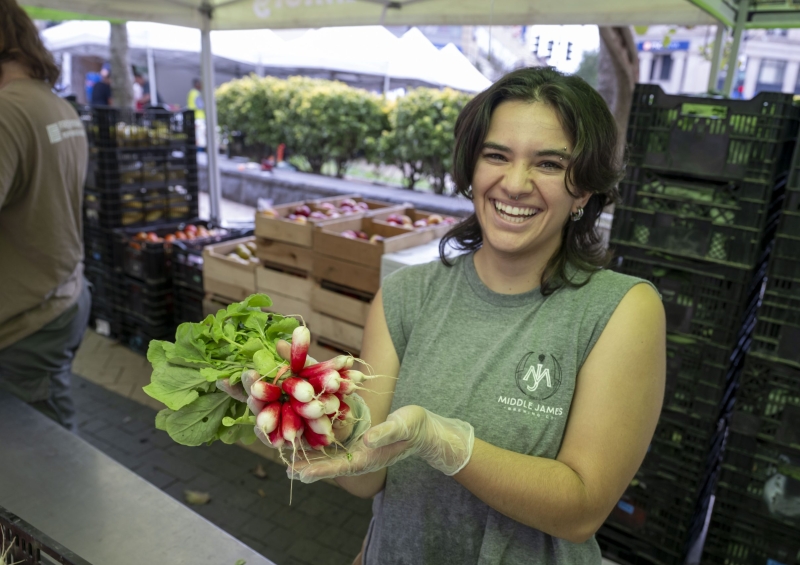
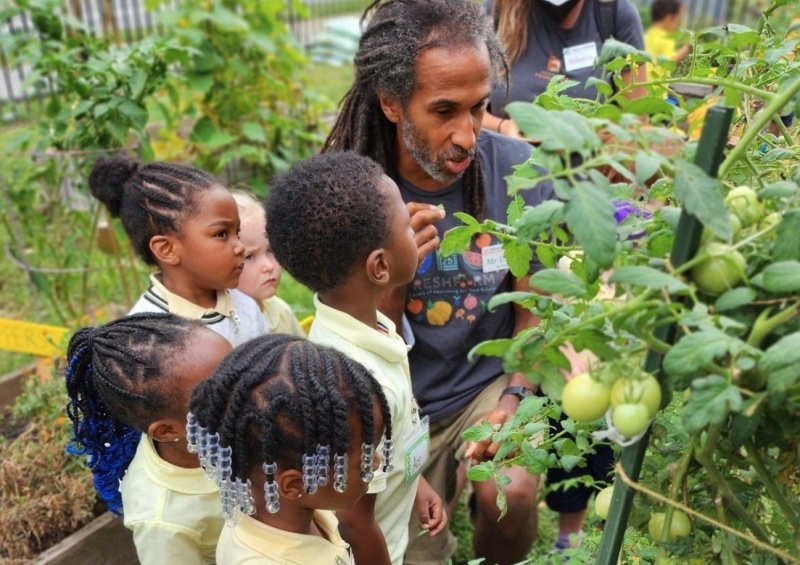
FRESHFARM sustained comprehensive FoodPrints programming in 21 DC public schools, led by a diverse team of 38 teachers, instructional coaches, garden managers, and culinary coaches, who enable learning to take root. Students harvested vegetables from their school garden, prepared them together in the classroom, and discovered that unfamiliar foods could become new favorites. The ripple effects extend beyond the classroom. Students bring recipes home, exposing families to new foods or delighting them with enthusiasm for fresh local foods like beets, radishes, and kale. “More than once at pick-up, I’ve been surprised to hear what my daughter tried and liked during FoodPrints (kale! Bean soup!),” shared one parent. “Being involved in the preparation of these foods gives her a sense of ownership and curiosity.”

The FoodPrints model increases food literacy for both our students and future food educators, equipping them with knowledge, skills, and empowerment to eat nutritious food. FoodPrints trains future educators through our robust service learning program, placing college-age students as assistants in our classrooms, and through a course on Hands-On Food Education at The George Washington University Global Food Institute.

Focusing the FoodPrints Model in Early Childhood Education 

In 2025, we modified our approach to partnering with early childhood education (ECE) centers to serve our youngest eaters and their families. Rather than dispersing our limited funding and FRESHFARM staff capacity across many centers, we focused our FoodPrints ECE partnership structure on deeper engagement with three centers east of the Anacostia River, reaching young students, their teachers, and families in a comprehensive approach to changing food environments.

I love FoodPrints, and I want to tell you why. I never cooked or baked before, but now I do. Now I love making food all because of FoodPrints, and I want other kids to experience what I have.
– Fifth grader, John Francis Education Campus 

Objective 4

Thought Leadership

Cultivate policies that foster a strong local food system through increased thought leadership, data, and engagement.

Leading Regional Food System Resilience When It Mattered Most

As instability increased, the need for clear, coordinated policy and practice grew sharper. FRESHFARM continued to be a leader and central voice in the regional food system, amplifying the lived experience of our community and advocating to municipal decision-makers through public forums, peer associations, and conferences across the country.

FRESHFARM advocated for policy and budget recommendations to protect key food system investments in the District. We testified at the DC Council Committee on Health hearing on the Farmers Market Support Amendment Act, bringing firsthand insight into what it takes to keep markets viable and accessible. We also testified in support of maintaining public funding for Produce Plus. FoodPrints staff, students, families, and school administrators advocated to Mayor Bowser and the DC Council to ensure FoodPrints retained vital funding.

Turning Ideas Into Action

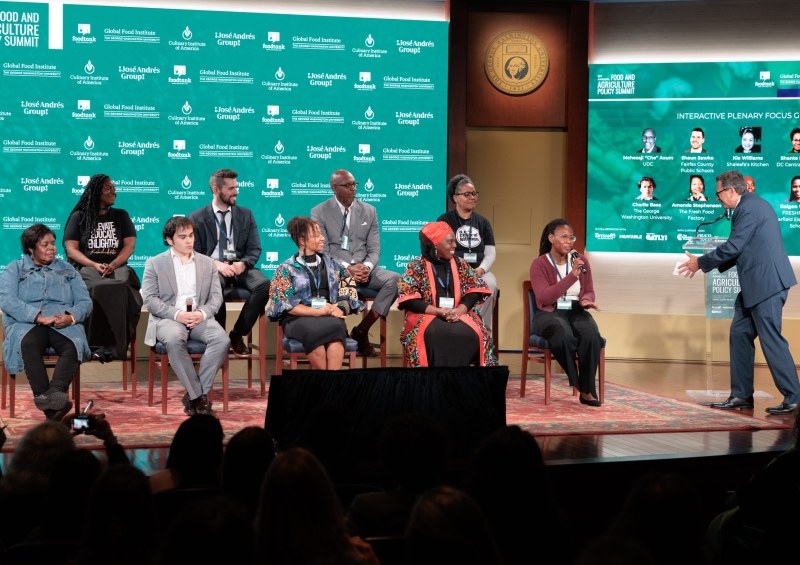
FRESHFARM staff contributed cross-sector expertise through regional and multi-jurisdictional bodies, including the DC Food Policy Council, Virginia FreshMatch, Food Systems Leadership Network, Children’s National FLiPRx Community Board, and the Food and Agriculture Regional Member (FARM) Policy Committee and Regional Agriculture Working Group within the Metropolitan Washington Council of Governments (MWCOG). These roles enable FRESHFARM to turn ideas into action for markets, farmers, and community partners across the region. Staff also delivered presentations at major gatherings, including the Future Harvest conference, American University Nutrition Education Forum, Nutrition Incentive Hub National Convening, Food Systems Leadership Network conference, and the Food and Agriculture Policy Summit, co-presented by Food Tank, the Global Food Institute at George Washington University, and the Culinary Institute of America. Two FRESHFARM staff members serve as adjunct faculty at the Global Food Institute at George Washington University, teaching courses on regional food systems and hands-on food education. Local and national media continue to engage FRESHFARM leaders as food system experts, with coverage in Civil Eats, Axios DC, CNN, WJLA, and Education Week.

FRESHFARM also deepened its thought leadership through research and field-building. Over the past two years, FRESHFARM collaborated with researchers at the George Washington University Milken Institute School of Public Health to measure growth in food literacy among FoodPrints students. Students with strong food literacy are better equipped to choose, cook, and enjoy nutritious foods throughout their lives. Results showed a significant increase in overall food literacy scores from the start to the end of the school year, underscoring that hands-on food education shapes how young people eat, cook, and care for themselves for years to come.

A career in food and garden education is a powerful way to be a positive change agent in the local food system. I love taking my 14 years of experience with FoodPrints to cultivate the next generation of teachers.
– Ibti Vincent, FoodPrints Instructional Coach and GW Global Food Institute Professor 

Objective 5

Social Justice & Equity

Apply a social justice and equity lens in decision making, resource allocation, and staff development to mitigate the impacts of racism in the food system.

Building Equity From the Inside Out

In 2025, meeting the moment required making fast decisions without losing transparency. FRESHFARM directed resources where the impact was greatest while staying accountable to the people most affected by faltering systems. FRESHFARM strengthened internal practices and community feedback channels to keep our work accessible and culturally responsive to the lived realities of the farmers and producers, shoppers, partners, and staff who power our local food system.

This year’s emergencies underscored why that lens matters. During the federal shutdown, we saw how quickly food insecurity can increase when paychecks and nutrition benefits disappear. We quickly scaled up the distribution of our FreshMatch funds, knowing that immediate assistance would alleviate the stress of slashed grocery budgets for neighbors and the fear of not knowing how to put fresh, nutritious food on the table. This crisis was wide-reaching, affecting families on SNAP as well as furloughed federal workers who may have been struggling to put food on the table for the first time.

Building Systems, Centering People

In 2025, FRESHFARM invested in stronger organizational infrastructure to support equity from the inside out by implementing a Human Resources Information System that enables more accurate tracking of workforce demographics. Having a clear picture of who works at FRESHFARM helps us understand where we need to invest in recruitment, retention, and professional development over the long term, with the ultimate goal of building a staff that reflects the communities we serve.

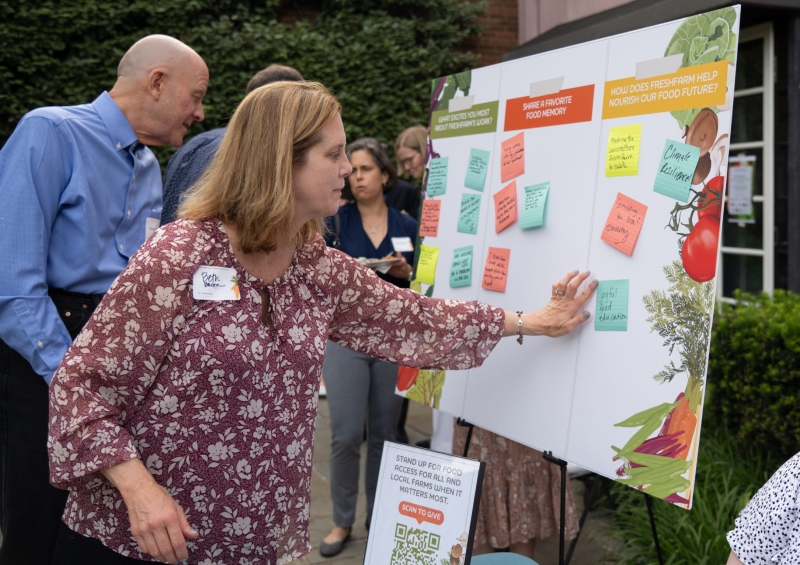
Across FRESHFARM’s programs, we continued building mechanisms for shared learning and community input. The Food Hub team, in partnership with consultants from America’s Healthy Food Financing Initiative, held focus groups and one-on-one interviews with community partners, Market Share CSA customers, and farmers to develop a mission-grounded business plan. The Food Hub also developed clear, consistent guidelines to equitably offer matching funds to clients, balancing mission-driven goals with long-term operational sustainability.

At the market level, we maintained a strong presence of farmers and producers of color, who make up 33% of our network. We also strengthened our Market Champion model by hiring two new bilingual Champions, who speak Spanish and Mandarin, and incorporating their feedback directly into program policy and communications. Such hires ensure that the people closest to the shopper experience help shape how our systems work.

We are so blessed to partner with the Food Hub to source fresh produce for the families who attend the Abiding Presence Food Pantry. They are incredibly grateful to be able to receive healthy, fresh food.
– Sharon, Food Ministry Coordinator at Abiding Presence

Objective 6

Organizational Stewardship

Increase the health and vitality of FRESHFARM to ensure our ability to achieve our goals.

A New Chapter in Leadership

FRESHFARM entered a new phase of leadership in 2025, positioning the organization for the future while maintaining continuity across programs. Following the departure of Executive Director Hugo Mogollon, the FRESHFARM Board of Directors hired Interim Executive Director Jacquelyn Lendsey while conducting a national search for our next leader. Last August, the Board hired former White House Public Health Advisor Cat Oakar, whose twenty-year career in food and health policy uniquely positions her to advance FRESHFARM’s mission at a critical juncture. As demand for our programs grew and the broader policy and funding landscape shifted, her experience and vision were instrumental in guiding FRESHFARM through an especially challenging fall season for communities that depend on FRESHFARM programs and services.


Resilience by Design

Organizational stewardship made our mission possible in real time. As external crises intensified and community needs shifted quickly, FRESHFARM’s ability to respond depended on strong financial controls, clear communications, well-supported staff, and philanthropic partnerships rooted in trust. This year reinforced a core lesson: flexible funding and reliable relationships are the infrastructure that allows an organization to meet the moment without breaking.

In 2025, we concluded our three-year Growth Campaign, which strengthened financial structures and enhanced fundraising capacity, enabling us to navigate leadership change and external volatility without organizational disruption. We also deepened communication with philanthropic partners, recognizing that candid, values-aligned updates are essential to sustaining flexible support in crisis. Our budgeting process became more disciplined, incorporating funding nuances and contingencies; the senior leadership team actively forecasted finances throughout the year, enabling smarter, earlier decisions in a shifting grant landscape.

We are proud to report a clean audit for our FY2024 financial statements, an important indicator of sound financial management and organizational maturity. We also implemented a new CRM tool to better track contributions and improve reconciliation, strengthening individual donor relationships and long-term sustainability.

Team and Workplace Satisfaction

In 2025, we launched a compensation policy to increase transparency around pay; ensured all team members received comprehensive onboarding; and facilitated an annual survey, 90-day check-ins, and exit interviews. Staff feedback reflects a healthy internal foundation: over 90% feel comfortable explaining FRESHFARM’s mission; 95% rate our workplace as consistently psychologically safe; and over 90% feel well-resourced, empowered, and valued. FRESHFARM enjoys a staff turnover rate of 10%, significantly lower than the national average for nonprofit organizations.

Taken together, these investments in staff, systems, and partnerships ensured FRESHFARM could remain steady and responsive amid concurrent crises.

FRESHFARM remains the best environment I’ve ever worked in. I’m continuously surprised by the integrity of leadership and their commitment to doing right by employees while upholding our mission.
– FRESHFARM Team Member

.

Impact Highlight

When the federal shutdown left thousands without paychecks or SNAP benefits, FRESHFARM quickly expanded its FreshMatch incentive program so that both SNAP recipients and furloughed federal workers could continue accessing fresh, local produce. Each of our teams mobilized, philanthropic partners provided flexible funding, and the response became a lifeline for community members and the regional farmers who depend on market revenue.

FRESHFARM’s Rapid Food Access Response During Federal Government Shutdown

Last fall, many families across the Washington, DC, region were in crisis. The historic federal government shutdown had extended into its second month. As SNAP benefits were halted and furloughed federal workers went without paychecks, FRESHFARM responded quickly. Our teams adapted and implemented a frontline, real-time response to expand FreshMatch, our incentive program for shoppers using nutrition benefits.

  • Our Development team secured flexible philanthropic support, enabling FRESHFARM to swiftly expand our food access work.
  • Our Food Access team redesigned the FreshMatch program structure to support the influx of community members facing food insecurity.
  • Our Markets team guided thousands of shoppers through the redemption of nutrition benefits and expanded incentives, and distributed educational materials in multiple languages across dozens of locations.
  • Our Food Hub team ensured that organizations’ produce orders were uninterrupted. In November, Market Share CSA shoppers who typically paid with SNAP benefits received their shares at no cost.
  • Our Administrative and Finance teams processed nutrition incentives redemption at a rate 416% higher in November and December 2025 than in November and December 2024, and ensured farmer reimbursements were processed efficiently and transparently.
  • Our Communications team worked to keep the public informed about FRESHFARM’s efforts and to rally community support amid a turbulent news cycle.

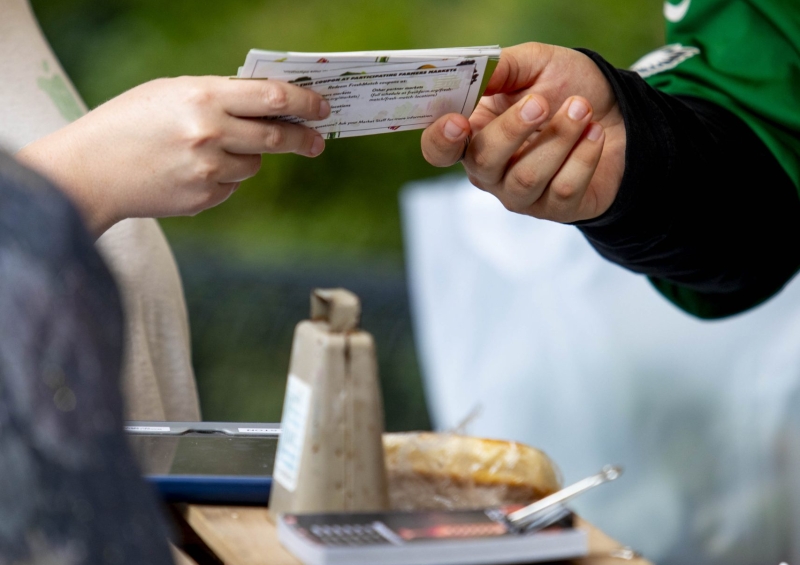
Between November 1 and November 17, FRESHFARM launched an unprecedented effort to provide $30 in benefits to furloughed federal workers and all SNAP shoppers, regardless of whether they had benefits to spend, at every FRESHFARM market and partner location. Our team worked tirelessly to distribute market coupons at scale, build real-time tracking systems to ensure fiscal responsibility, and clearly communicate these shifting policies to community members.

This work required us to be fast, precise, and responsible stewards of our resources. In that short time, more than $128,000 in FreshMatch incentives were distributed at FRESHFARM markets, a 700% increase compared to November 2024. An additional $11,700 was redeemed at partner markets. These numbers represent a real impact for thousands of individuals and families who were able to continue accessing fresh, local produce during the shutdown. However, SNAP spending fell 37% in November compared to the year prior, a stark reminder that decisions made at the federal level can have an outsized impact in our backyard.

Philanthropic partners, in particular the Robert I. Schattner Foundation and Morningstar Foundation, provided flexible support, and more than $22,000 in individual donations enabled us to act immediately and meet the moment. Because FreshMatch dollars are spent directly with farmers, these emergency funds became critical revenue for small and mid-sized regional producers operating on thin margins.

This rapid response proved to be a lifeline for many community members. “I am a single mother, and I had a 25-year career as a USAID contractor,” a FreshMatch shopper told us last fall. “I’ve been going to the market all summer with my SNAP benefits, and it’s been wonderful to buy some things there. The FreshMatch program has been tremendously helpful. The Market staff are so nice and helpful, while still honoring my dignity. Today I was given an extra $30 because of SNAP cuts. It’s just wonderful.”

I was a furloughed fed, and the $30 given to me by FRESHFARM offered me hope for my community and greatly helped alleviate my grocery bill. I was incredibly touched by this program.
– Lauren, a federal employee impacted by the federal government shutdown and beneficiary of FRESHFARM’s emergency FreshMatch response 

2025 Financials

In 2025, we focused on completing our organizational infrastructure. We welcomed an Accounts Payable Manager to our Finance team — filling the final functional accounting role — and achieved a fully clean audit of our 2024 financials, clearing all prior audit findings for the first time. Despite significant federal funding uncertainty that affected many peer organizations, we successfully retained all of our federal contracts. Our grants portfolio grew to $7.4 million, up from $6.0 million in the prior year, and total revenue reached $12.9 million, a nearly 10% increase over 2024. As always, our people remain our most valuable resource; personnel expenses comprised more than half of FRESHFARM’s 2025 expenses.

Revenue

Program Income $3,449,165
Earned Income $164,198
Donations $1,919,797
Grants $7,352,932

Total$12,886,092

Expenses

Administration $489,403
Development $619,374
Farmers Markets $2,533,457
Food Access $3,074,884
Food Hub $2,175,385
FoodPrints $3,598,676

Total$12,491,179

Please note: These are preliminary numbers and subject to change once the 2025 Financial Audit is complete.

Funders

FRESHFARM thanks the many thoughtful and consistent funding partners who have invested in our work as we have grown. Long-term funder relationships are critically important to us. Beyond just the consistent financial commitments, these relationships bolster confidence in our mission and signal capacity to other potential strategic partners. Investments in our Growth Campaign over the past three years have equipped us well to expand our Development staff capacity, implement new earned revenue strategies, and deploy new tools for data tracking and analysis. In the next three years, we look forward to leveraging our Development team’s expertise and infrastructure to build new mission-aligned funding partnerships and strengthen existing ones in support of the more resilient, more equitable food system we are working toward together.

Every time we visit our local FRESHFARM market at Mount Vernon Triangle, it feels like we’re walking out to our family farm — minus all the hard work! What would we do without Dru’s eggs or Pleitez’s produce throughout the year? We’re lucky to enjoy easy access to nutritious food and support FRESHFARM to make that possible for others. We’re particularly grateful that FoodPrints is bringing healthy food and nutrition education into public schools across DC to inspire the next generation of healthy eaters.

— Candy Markman and Terry Horgan; donors since 2020; shoppers at FRESHFARM Mount Vernon Triangle Market

$15,000 - $24,999

  • Alice Shaver Foundation
  • Ann and Charles Yonkers
  • Bald Hill Foundation
  • Judy and Peter Blum Kovler Foundation
  • Lavin Family Foundation
  • Linda and John Costa
  • Ponce de Leon Stein Fund
  • The Share Fund

$5,000 - $14,999

  • Alexandra Lewin-Zwerdling and Alexander Zwerdling
  • Andrea Tokheim and Paul Marquardt
  • Aramco Americas
  • Claudia Barnett
  • GEICO Corporation
  • Guillermo Orozco and Chelsea Meiners
  • Jessica Zetzman and Kim Vu
  • Joan Fabry and Michael Klein
  • Mary Challinor and Henry Richardson
  • Meg McGoldrick
  • Samuel Fromartz and Ellen Chafee
  • Susan Buffone
  • Tait Sye, The Sye Fund
  • The Chicago Community Foundation
  • The Guagenti Family
  • The Lapham Family
  • The Marcus Foundation
  • The Oakar Family
  • Venable Foundation

Get Involved

At FRESHFARM, we believe that a strong and equitable Mid-Atlantic food system isn’t dictated by global supply chains. It’s grown from the ground up. As a regional and national leader in sustainable food systems, we are building something powerful in the Mid-Atlantic: farmers markets, food distribution networks, and food access programs that reach families who need them most; hands-on food and garden education that cultivates lifelong skills in students; and economic pathways that help local farmers and food businesses thrive.

2026 will not be an easy year. At a moment when our food system faces real pressures, FRESHFARM is leaning in: expanding our reach, deepening our partnerships, and showing up with greater commitment to stakeholders than ever before. We are guided by the belief that equitable, resilient communities are possible, but can only happen because of people like you.

Whether you’re new to FRESHFARM or have been with us for years, there is a place for you in this movement. Here’s how to get started:

Special thanks to our 2025 Annual Report contributors: web report design by Interactive Strategies; print report design by DesignChef; illustrations by OK Creative Studio; videography by Castle Gate Media; photography by Cookie Captures, Lisa Helfert, Mariah Miranda Photography, William Atkins/The George Washington University, and FRESHFARM staff; and editing by 7Deadly Consulting.


View Past Annual Reports

2024 Annual Report

2023 Annual Report

2022 Annual Report

2021 Annual Report

2020 Annual Report