FRESHFARM FoodPrints Increases Food Literacy in Kids
What is food literacy? Some may say it’s being able to read a Nutrition Facts label on the side of a cereal box or knowing that carrots are orange and have vitamins in them. It does include those things, but it’s so much more!
Food literacy is a combination of knowledge, skills, and empowerment. It’s the key to making informed choices about what foods we put in our body. Instead of simply knowing that carrots are orange and have vitamins, a student with strong food literacy goes beyond that. She understands where carrots come from, has the skills and the confidence to prepare them, enjoys the social connection of preparing and eating those carrots with others, and makes intentional choices about her diet to include carrots and other fresh veggies. Students with strong food literacy are better equipped to choose, cook, and enjoy nutritious foods throughout their lives.
To understand the impact of our FoodPrints program on students’ food literacy, we conducted a two-year study in partnership with the George Washington University (GW) Milken Institute School of Public Health. The study results showed an increase in food literacy, suggesting that FoodPrints students are more likely to choose nutritious foods in the long run.
Novel Approach to Measuring Food Literacy
When GW researchers conducted focus groups with FoodPrints 5th graders and alumni in 2022, the students’ holistic understanding around food came to light. This led the research team to explore how the concept of food literacy is evident in the FoodPrints program, and if our students build food literacy over time. The GW research team developed and validated a new food literacy assessment tool called the “Building Informed, Thoughtful, Empowered Eaters” (BITE) questionnaire, specifically for 4th- and 5th-graders to measure four key dimensions of food literacy, all which are present in the FoodPrints program:
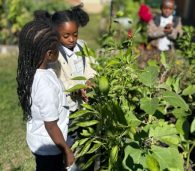
 Food systems and nutrition knowledge: Students learn how food is grown, how it gets from the garden or farm to their plate, and how the food helps their bodies. The FoodPrints curriculum is based on food systems concepts with hands-on cooking and gardening lessons.
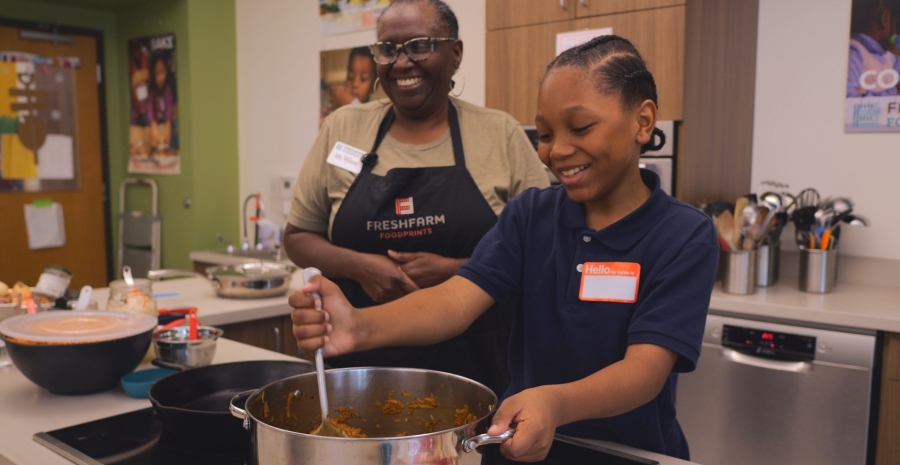
 Confidence in everyday food skills: Students learn to use real kitchen tools and read recipes to learn to cook independently and prepare meals. These experiences in FoodPrints are centered around empowering students to cook and eat nutritious food.

Valuing shared food experiences: Shared experiences create pride in what one prepares and the ability to respectfully share a meal with new foods. In FoodPrints, students cook together in small groups, and ‘eat and appreciate’ together at the end of each class.

Purposeful engagement with food: Students have multiple opportunities to try and explore new foods in a safe, joyful environment. FoodPrints provides these opportunities in immersive sessions embedded during the school day.
“Looking at food literacy in children through these four dimensions was a novel research approach that centers their developmental life stage,” said Christine St. Pierre, GW PhD Candidate and lead researcher on the project. “Partnering with FRESHFARM meant we could gain a better understanding of measuring these dimensions while generating evidence for the impact of FoodPrints—a true win-win!”
Research Shows Increased Food Literacy Scores After a Year of FoodPrints Programming
The GW research team used the BITE tool in the 2024-25 school year to gather pre- and post-responses of more than 400 FoodPrints students from six established partner schools. The results showed a significant increase in overall food literacy scores from the start to the end of the school year. The increase was especially strong in two areas in which students demonstrated:
- A stronger understanding of where food comes from and how it nourishes their bodies (food systems and nutrition knowledge)
- Greater confidence in their ability to make healthy food decisions, and prepare and eat nutritious meals (confidence in everyday food skills)
“The food literacy results are evidence that FoodPrints students are building the capacity to make informed, nutritious food choices that will shape their food habits as they grow up,” said St. Pierre.
Holistic Food Education Makes a Difference
This study builds on the existing evidence base for the program. Lessons are grounded in food systems concepts and brought to life through hands-on experiences. Students grow and cook a wide variety of fruits and vegetables, using real tools and life skills to prepare recipes that result in food they’re excited to eat. Our non-pressured approach encourages students to try new foods at their own pace, engaging all five senses without fear of judgment.
FoodPrints also emphasizes the social and emotional dimensions of food. Students cook in small teams, eat food they’ve prepared together, and learn to respect each other’s preferences, which is captured perfectly in the classroom mantra, “Don’t yuck my yum.” These shared experiences help create joyful, inclusive environments where food becomes a source of connection rather than a source of stress.
Food literacy helps people navigate food choices in a complex food environment with persuasive advertising and varied levels of access to different kinds of foods. Food literacy can be taught, practiced, and strengthened. By embedding food education in elementary schools and empowering students through hands-on learning, FoodPrints shapes how young people eat, cook, and care for themselves and their communities for years to come. As one FoodPrints alumni student, who is now a young adult, explained: “That excitement and joy that came from FoodPrints has carried over into the way I enjoy cooking now…the prepping a meal, chopping up vegetables, those basic things. Learning those skills at an early age and making it fun and interesting, I think, was really important.”