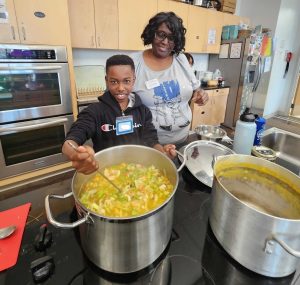
Cultivating Community is Key to Building Trust and Making Change
In our experience, cultivating community and building trust leads to lasting change. We believe that food and garden education is most powerful when we engage families, build trust with school staff, partner with school leaders, and respond to feedback from each school’s community. In this section, we share ideas for including your community in food and garden education.
FoodPrints stands out by embedding experienced and qualified food and garden educators in schools. Through this sustained presence, we help increase schools’ capacity and infrastructure and create lasting changes in how food education is delivered.
We believe that food and garden education is most powerful when we engage families, build trust with school staff, partner with school leaders, and respond to feedback from each school’s community.
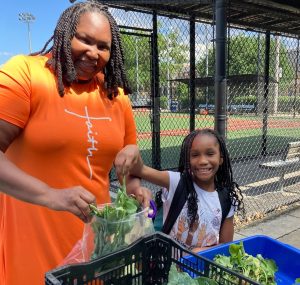
Parents and caretakers are often wowed by their children’s experiences cooking and gardening in school. They love learning and eating alongside their kids. Five ways we love to engage families are:
> Joining school events: For example, when there is a Fall Festival, we have a station with quick, interactive activities like scrubbing root vegetables and tasting a fresh recipe. Before a chorus concert, we offer families a plate of salad since many are coming hungry right from work. At an Earth Day event, we provide bags of fresh produce to take home and information on DC’s composting options.
> Hosting events at school: In addition to joining school-wide events, we also host events at our schools. We host family-cooking classes so that families can learn new recipes and eat dinner together. We host garden harvest parties for families to enjoy time in the garden together. We also host Recipe Tastings after school to showcase the variety of nutritious recipes students are cooking in our program.
> Inviting families to garden work days: Families are invited to learn new gardening skills, help with garden maintenance tasks, and harvest vegetables to bring home. These garden work days enable families to give back to their school, learn from our garden experts, and build community with one another.
> Encouraging parents to volunteer during cooking or garden programming: Parents enjoy seeing their children learning new cooking skills and celebrating new foods that become part of the menu at home.
> Providing Food Access and Food Navigation Resources: We make sure to offer our families relevant information on food access and food navigation such as: nearby farmers markets and farm stands, information on benefits accepted by farmers markets and farmstands, and emergency food assistance.
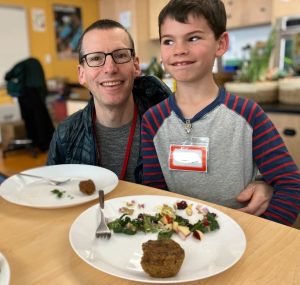
When our FoodPrints teachers and classroom teachers work as a team, we see food and garden education extend into students’ everyday learning, beyond the kitchen and garden. We engage school staff by:
> Supporting student learning: We coordinate closely with classroom teachers, aligning our FoodPrints lessons with their students’ current units of study. This collaboration reinforces classroom learning and helps teachers see our program as an extension of their work with students.
> Asking for insight: Classroom teachers know their students best. When we’re looking for ways to better engage a class or support a student with challenging behaviors, we seek out teachers’ expertise and suggestions. By approaching them as partners and teammates, we strengthen mutual respect and ensure we’re working together toward shared goals.
> Sharing recipes (and food!): We always make sure there is enough food for students and staff, so that teachers, custodians, aides, nurses, and administrators can enjoy a taste of what students are cooking. Sharing food is a simple but powerful gesture of care that helps build community, connection, and trust throughout the school.
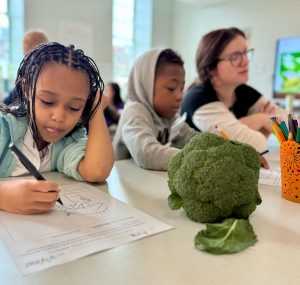
Strong partnerships with school leaders make food and garden education programming possible. When principals and administrators understand and value food and garden education, they help ensure it’s woven into the culture of the school. Together, we create a shared vision of programming that supports their goals for their school community. We make sure to partner with school leaders through:
> A shared belief in food and garden education: We partner with school leaders who see food and garden education as essential to whole-child learning. By aligning our goals with the school’s priorities—academic achievement, wellness, and community-building—we show how FoodPrints supports the broader mission of the school.
> Collective excitement for hands-on learning: We build enthusiasm by inviting school leaders to see students in action, learning, cooking and eating, and gardening together. When administrators experience firsthand the joy and engagement in a kitchen classroom or garden, they become champions of this work and advocate for its continued growth.
> Open communication with logistics and infrastructure for programming: We collaborate with leaders on the practical elements that make the program successful: scheduling lessons, maintaining garden spaces, welcoming parent volunteers, etc. Their support helps integrate food and garden programming into the school day and sustain it year after year.
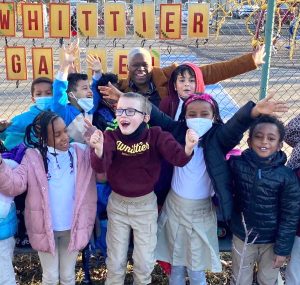
Listening and adapting are essential to how our program grows and thrives in each of our school communities. We value feedback from students, families, and staff, and use it to shape our lessons, recipes, and events so they reflect and celebrate the unique cultures and preferences of each school. We use feedback in the following ways:
> Cooking culturally relevant recipes: We thoughtfully select and adapt recipes that reflect the diverse backgrounds of our students and families. By cooking dishes that value beloved ingredients and traditions, we honor the cultures and traditions of our students, staff, and families.
> Integrating input from the school community: We regularly ask for and incorporate feedback from students, teachers, families, and school leaders to strengthen our programming. This ongoing dialogue helps us stay responsive and ensures that food and garden education continues to meet the needs and priorities of each school.
> Tailoring events to each school community: We plan school events in collaboration with school leaders, staff, and families. We gather input on recipes for tastings, timing for family cooking workshops, or types of activities to engage students at a school festival. This intentional approach makes our events feel relevant and welcoming.