Where Teachers Become Students: Inside FoodPrints Cook Camp
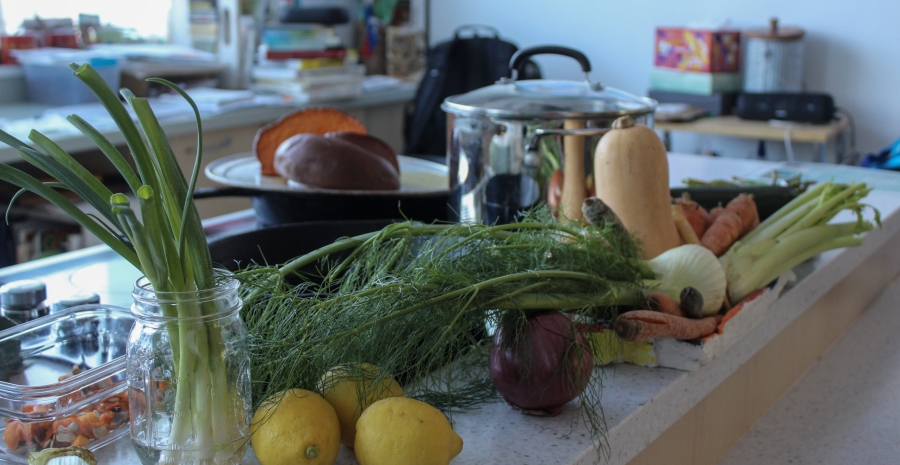
On a sunny Friday, a team of FoodPrints educators gathers in the kitchen classroom at School Within School for Cook Camp. Instead of teaching students on this professional development day, FoodPrints teachers will learn and cook together. Through the morning, they will practice and refine recipes intended for their FoodPrints students, across 21 Washington, DC elementary schools, to cook and eat in the months ahead.
What Is Cook Camp?
Cook Camp gives FoodPrints teachers the opportunity to workshop recipes together, with the goal that the resulting lessons encourage student participation and a delicious end product, while built-in flexibility accommodates each classroom’s unique needs. This Friday morning, two Camps were being held simultaneously, with Culinary Coaches Derek Bowley and Margi Fineran at the helms. At our site, Margi welcomes teachers to start the morning—after years in the precise world of pastry, she delights in the unpredictability of cooking with young learners. In a FoodPrints classroom kitchen, curiosity and discovery matter more than perfect execution.
Recipe Testing With Young Learners in Mind
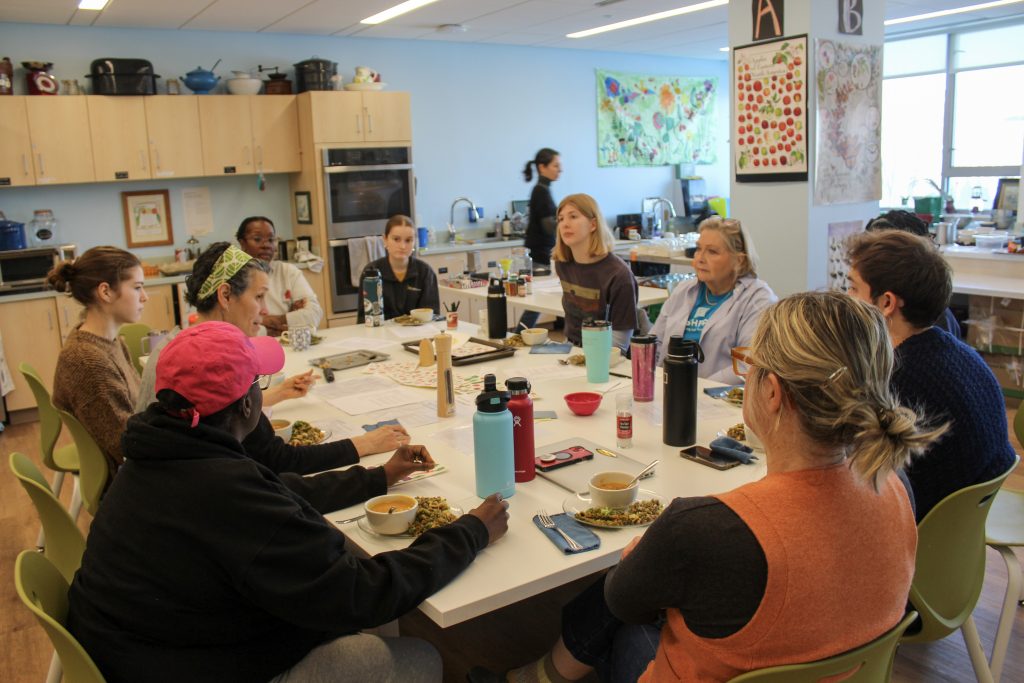
The day’s agenda centers on testing three recipes slated for classroom use. First is a winter squash soup, an updated version that draws from a few existing FoodPrints recipes to create a single reliable recipe that balances flavor and classroom practicality. Next comes a French lentil salad, designed as a winter-friendly dish, featuring seasonal ingredients like celery and dried apples.
Conversation quickly extends beyond taste to logistics, as teachers consider how ingredient preparation affects student participation. For instance, if dried apple slices are too thick, child-safe scissors may struggle to cut them, so a thinner dried apple slice—from a farmer in FRESHFARM’s network—is chosen. These small details meaningfully influence a student’s confidence and independence in the kitchen.
The final recipe is a fonio pilaf, inspired by Pierre Thiam’s cookbook, Simply Fonio. As many teachers are working with the ancient West African grain for the first time, Margi quickly notes a key technique revealed by recipe testers: toasting the grains before adding liquid deepens both aroma and flavor. This finding will shape how the recipe is taught in classrooms.
As they move through the kitchen, teachers spend time mapping out the student experience for each dish. They discuss the logistical challenges and emotional rewards for different strategies, consider how to break the recipe into small, student-friendly steps, and determine which ingredients require adult pre-preparation. These conversations highlight the thought and reflection behind FoodPrints’ student-centered lessons that empower students with both cooking skills and nutrition knowledge.
Teachers also reflect on the moments that consistently spark student enthusiasm. The tactile pleasure of plunging hands into a bowl of uncooked lentils, the excitement of passing around unfamiliar vegetables, harvesting herbs from the garden moments before cooking, and the dramatic whir of an immersion blender turning roasted squash into soup all become touchpoints for joyful learning.
Recipe Testing With a Side of Team Building
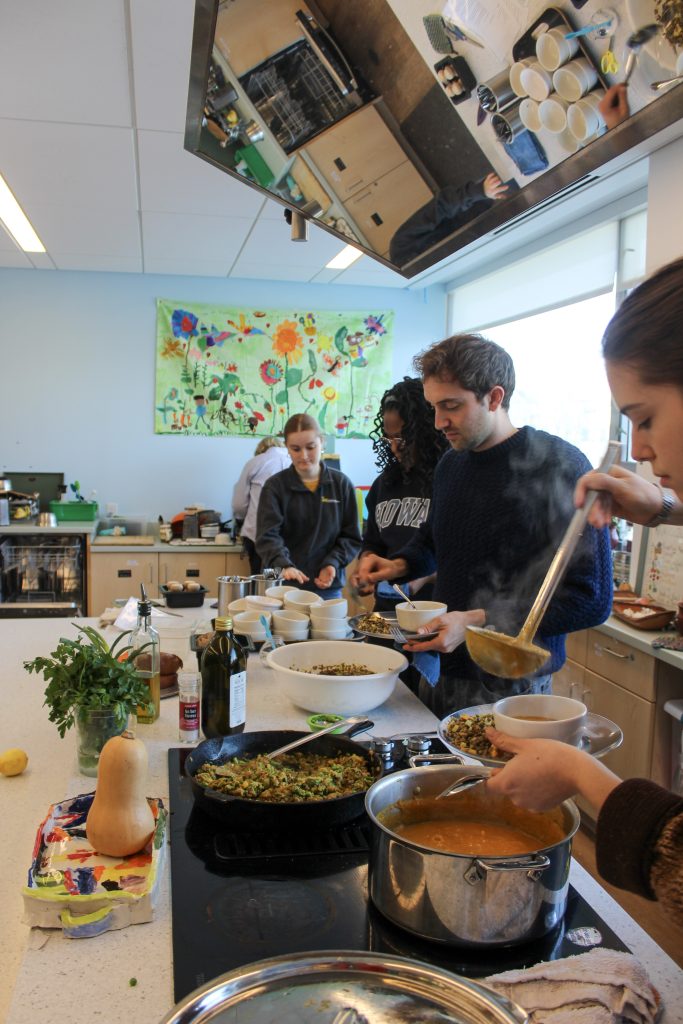 Soon, planning gives way to action. The teaching kitchen fills with delicious aromas and laughter as educators collaborate on recipe preparation. When the dishes are complete, the group reconvenes at the table as learners, tasting together and offering further feedback.
For Davette Wilson, FoodPrints Lead Teacher, Cook Camp offers more than recipe development. “The camaraderie of being with my peers—it’s a bonding time, and we get to be the students again and learn new things,” she shares. “I love to be able to expose the kids to new ingredients and recipes.”
By the end of the morning, Cook Camp has accomplished its goal: equipping FoodPrints educators with thoughtfully tested recipes and shared inspiration that will extend into classrooms, gardens, and kitchens across the city.