From Field to Neighborhood: The Story of FRESHFARM Farm Stands
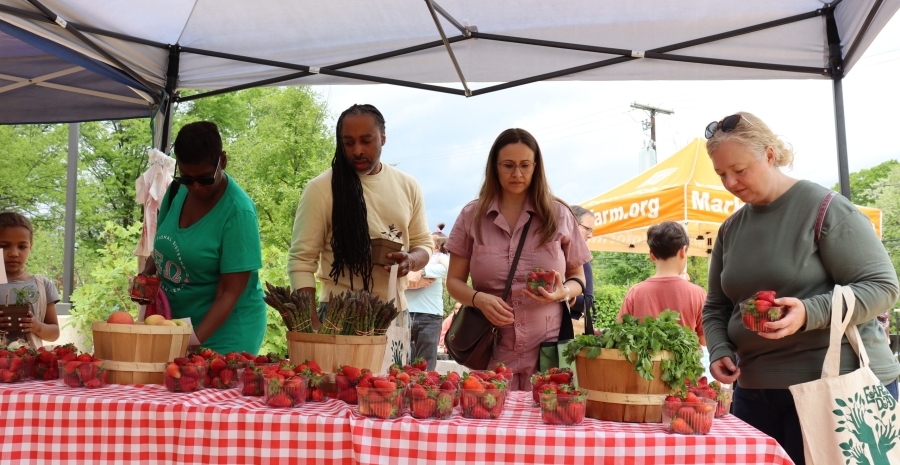
Farm Stands: A Different Kind of Market
Before most of Washington, DC wakes up on a Saturday morning, Ana Barajas of Barajas Produce is already on the road, a truck loaded with freshly harvested produce, heading from Colonial Beach, Virginia to Ward 7 to set up two FRESHFARM farm stands. First Ana drops off produce at Kenilworth Rec Center, where FRESHFARM staff sell on the farm’s behalf directly to neighbors. Ana then continues on to Cesar Chavez, where the Barajas team operates the stand themselves. At this location, in addition to selling to retail shoppers, Barajas Produce fulfills a wholesale order with the FRESHFARM Food Hub.
Why does Barajas Produce put farm resources behind farm stands when the Washington, DC Metro area has so many farmers markets where they could sell? “The farm stands have helped us bring in extra revenue to our farm while providing local fresh produce where it’s not easily accessible,” explains Ana Barajas. FRESHFARM farm stands offer flexible financial infrastructure and operational support that allows farms like Barajas to deepen rural-urban connections, generate meaningful revenue, and improve food access.
Seven Farm Stands, One Mission
In some Washington, DC, neighborhoods — many of them east of the Anacostia River — fresh produce can be hard to find. Grocery stores are few, farmers markets are clustered elsewhere, and for families relying on federal nutrition benefits, the gap between food access and food security can feel wide. FRESHFARM’s Farm Stand program is built to close that gap, creating pathways for fresh, local produce to reach neighborhoods where access to food is limited.
FRESHFARM operates seven farm stands, six of which are East of the River, and as of this June all are open for the season. But we started small. In 2016, we opened the Cesar Chavez and Kenilworth Rec Center farm stands, and in 2017 we added another at Minnesota Ave. (all in Ward 7). At the beginning, sales were modest; for example, in 2017, combined gross sales at Cesar Chavez and Minnesota Ave. were $63,149. But these numbers told us these outlets were meeting an important need. These two farm stands accepted a wide range of payment methods, including nutrition benefits, and also offered dollar-for-dollar FreshMatch incentives. In 2017, 98% of sales at Cesar Chavez and Minnesota Ave. were nutrition benefits and FreshMatch.
Since starting the farm stand program, we’ve added locations and adapted the model in response to community feedback and what works for the farmers supplying produce. The 2026 farm stand locations include the Anacostia Community Museum, Cesar Chavez, Kenilworth Rec Center, Minnesota Ave., Simon Elementary, THEARC, and Whittier Elementary.
Since 2017, our farm stand network has generated a combined $715,355 in gross sales for farmers, 86% of which were nutrition benefits and FreshMatch incentives. Together, our farm stands and food access programs work to ensure that fresh, local foods are accessible to all, while strengthening the role of local farmers in building food security.
Flexible by Design
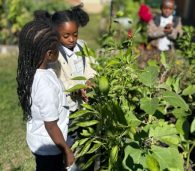
The farm stands source produce through flexible partnerships built around what works for farmers and what a given neighborhood actually needs, so the way each farm stand operates varies. Unlike a full farmers market, each farm stand focuses on local fruits and vegetables and often represents a single farmer who might buy from other farmers to ehance their product offerings. Sometimes the farmer runs the stand themselves, selling directly to neighbors and connecting with the FRESHFARM Food Hub to drop off wholesale orders. Other times, FRESHFARM staff run the stand on behalf of a farmer, who drops off produce in the morning and collects leftovers in the afternoon. Another option is for the FRESHFARM Food Hub to supply the produce and FRESHFARM staff to run the stand, which is how the FoodPrints school-based farm stands at Whittier and Simon operate.
By combining direct-to-consumer sales and wholesale orders and accepting a wide range of payment methods including nutrition incentives, FRESHFARM creates the financial infrastructure that keeps the farm stands viable and farmers and communities connected. “We’ve run the Minnesota Ave. farm stand since 2017 and it’s become an important part of our business,” explains farmer Astrid Pleitez of Pleitez Produce Farm (Montross, VA). “We drop off wholesale orders at the FRESHFARM Food Hub headquarters on our way to the farm stand, then set up and sell directly to shoppers. Produce Plus makes up a big part of our farm stand sales, which means real, reliable revenue for our farm and more fresh food reaching families who need it. It’s a win all around.”
Farm Stand & Friends
FRESHFARM strives to have the farm stands be more than simply food access sites. Last year we launched Farm Stand & Friends at two farm stands, inviting additional food producers, local businesses, community organizations, and performers once a month. These events transformed farm stands into dynamic neighborhood destinations that strengthened community connections. In 2026, we are offering Farm Stand & Friends at the Anacostia Community Museum, Cesar Chavez, and Minnesota Ave. during the final week of the month, June through November. We are actively recruiting participants, so please spread the word or apply.
Where Food Access Meets Community
The farm stand program sits at the intersection of some of FRESHFARM’s core commitments: supporting local farmers, reaching underserved communities, and building a food system that is both resilient and equitable. Each farm stand is a node in a larger network, one that stretches from regional farms to DC rec centers, schools, and community gathering places.
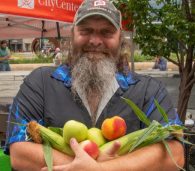
For the residents of Wards 7 and 8 who visit a FRESHFARM farm stand, the experience is simple: fresh tomatoes, sweet corn, local apples, and a chance to mingle with friends and neighbors. But that simplicity is the result of years of work building something that didn’t exist before: a direct, reliable, and equitable connection between the people who grow our food and the neighborhoods that need it most.