Why School Gardens Matter: Lessons from FoodPrints for Farm to School Month
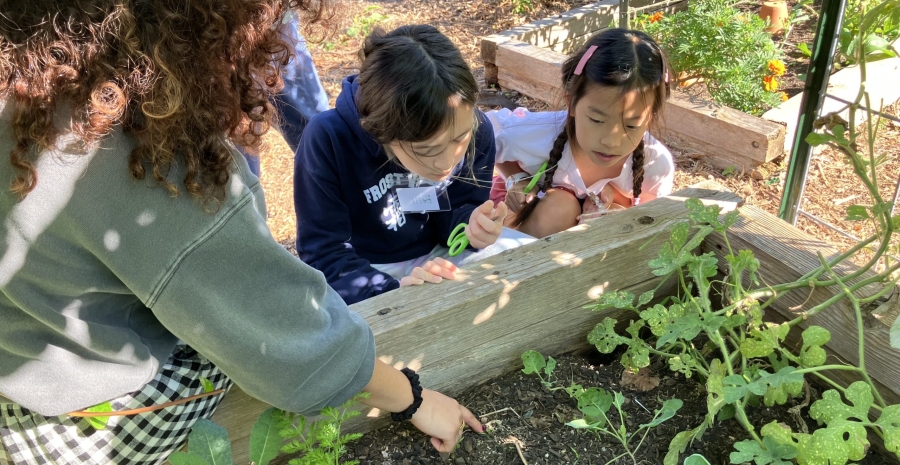
October may be Farm to School Month, but every month, FRESHFARM FoodPrints students grow, harvest, and eat fresh, local food from their school gardens and Mid-Atlantic farms.
FoodPrints school gardens are centerpieces of our partner schools — places where students visit to learn and find the joy and wonder in growing food and the natural world. Our school gardens provide the opportunity for everyone, from students to staff to families, to discover their own connection to and ownership of their school’s garden.
FoodPrints gardens are student-centered: in our classes, students do real work planting, caring for, winterizing, harvesting, and learning in their gardens. In doing so, they develop a sense of ownership that translates into confidence and pride in their ability to grow food.
Hands-On Learning: Seeing How Food Really Grows
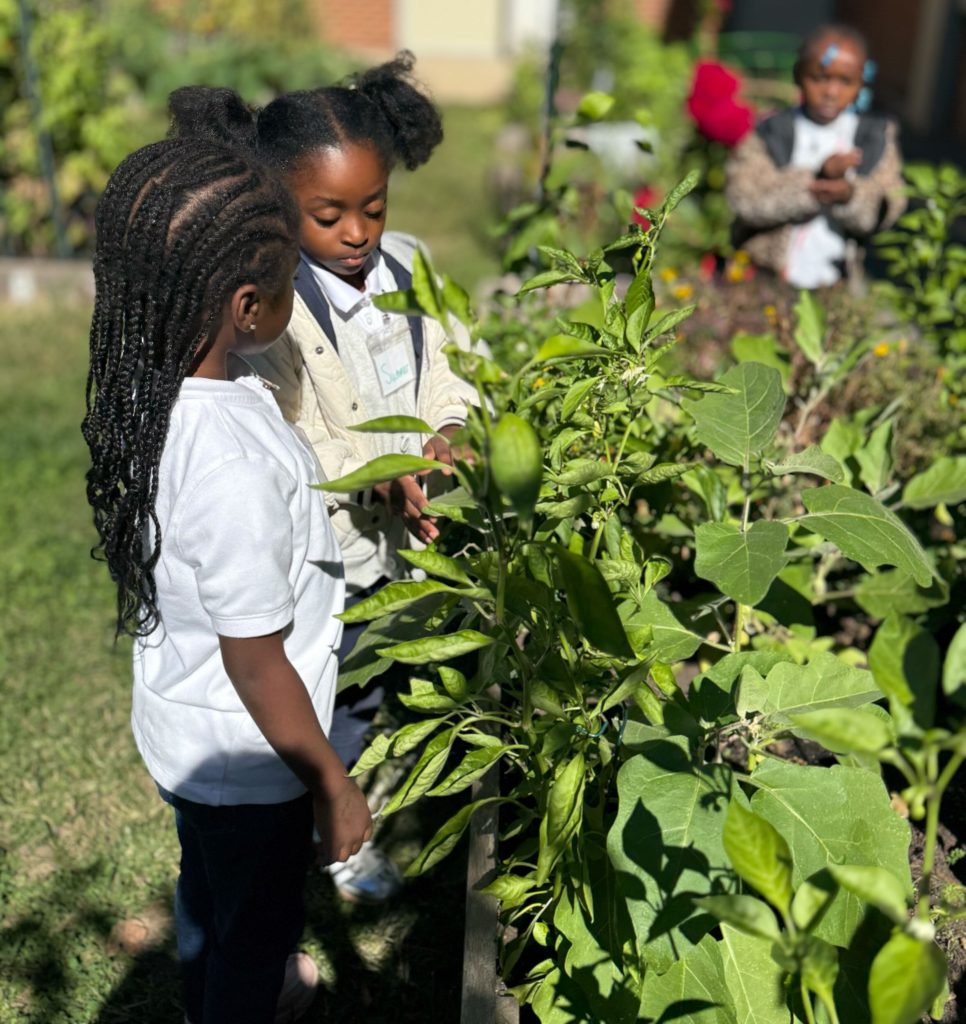 These regular garden experiences make the theoretical real and build connections with farmers, our food, and each other. Instead of hearing a teacher talk about fruits and vegetables coming from a farm or how carrots grow underground, students get to see carrots growing, even plant the seeds and then pull them out of the ground themselves months later.
Garden education is part of our larger, comprehensive food education model. The FoodPrints curriculum guides students in connecting concepts they learn in their classrooms to practical, real-world applications. They learn and practice skills needed to plant and grow food. As examples, our students use math to plant seeds the right distance apart and science to learn about worms and decomposition or the garden ecosystem. Taking ownership in the garden and practicing real-world skills can be transformative for students. As a Watkins Elementary parent observes, “Have you ever seen a group of eight-year-olds confidently wield cooking tools, or harvest vegetables from a garden, or gather quietly to watch a bumblebee pollinate a squash blossom? It’s truly a magical thing to witness!”
Building Social-Emotional Skills in the School Garden
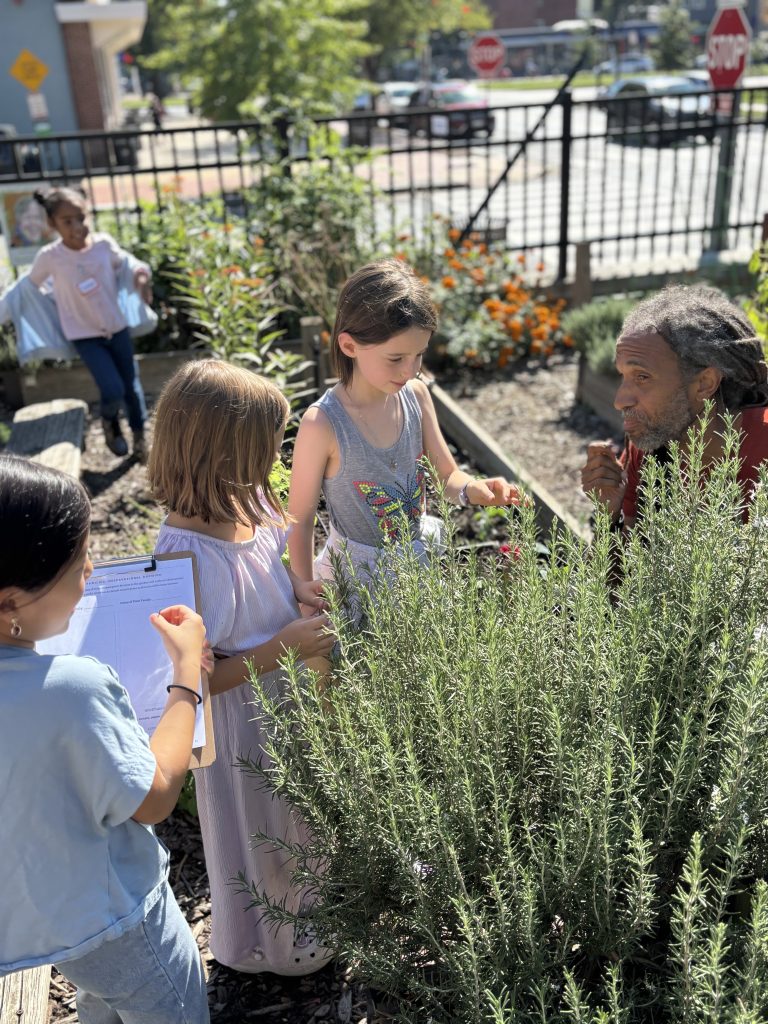 Perhaps more importantly, our students practice the social-emotional concepts of patience and generosity as we ask them not to harvest crops until they are ready, and to only harvest an amount that leaves enough for everyone. By learning about — and learning to care for and be careful around — the creatures that live in the garden, our students practice empathy and care for each other and the earth. Being in the garden also “fosters community between students,” says Aubryn Walters, FoodPrints Garden Coach. When students talk about their experiences and observations, their camaraderie with peers increases. “Being out in the garden, they are also more authentically themselves,” Aubryn notes.
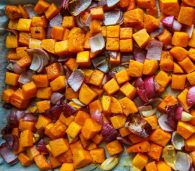
We pair experiences in the garden with cooking and eating in our kitchen classrooms under our grow-cook-eat-learn model. When students have direct experience growing food and then preparing it, they are more likely to try and like it, and they are so proud to share it with their peers. We see this with our recipe, Apple Beet Carrot Salad — a unique combination developed by our program founders that most of us wouldn’t expect kids to gravitate to but that has become a favorite over the years. As students see the cycle of seed to plant to their plates and view food as living plants, “that makes the food they see in the grocery store more real – and creates a connection to our planet,” Aubryn explains.
Caring for Our School Gardens Year-Round
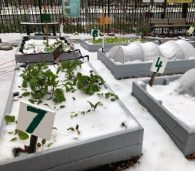
To maintain and improve our gardens, we invest in expertise and regular care from our garden team, led by FoodPrints Senior Garden Manager Ehren Vance. With intentional planning, our gardens produce seasonal fruits, veggies, and herbs year-round for our students to observe, harvest, and eat in FoodPrints classes.
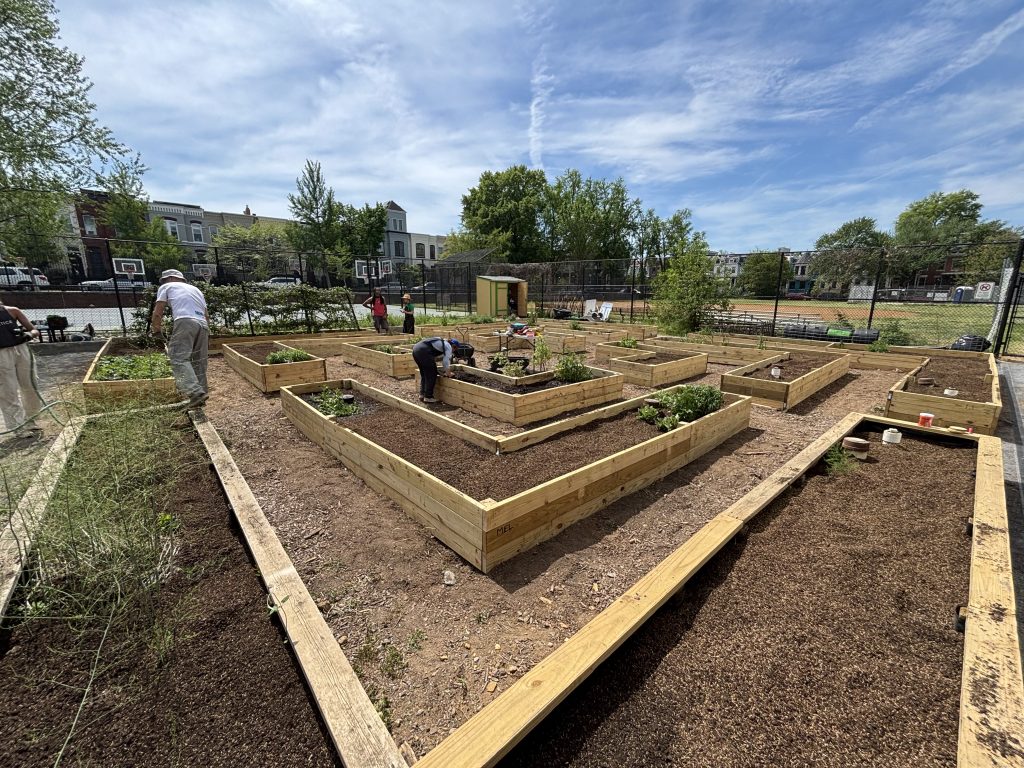 Our garden team are also in-house experts in rebuilding gardens: earlier this year, they led the rebuilding of one of our largest gardens at Ludlow Taylor Elementary with a series of concentric garden beds and 960 sq.ft. of growing space, and the garden at Yu Ying, where we added one bed to the now 250+ sq. ft. of growing space. This fall, we’ll rebuild the garden at our first partner school, Watkins Elementary, which is dedicated to one of our program founders, Barbara Percival. For each garden rebuild, our team plans the new beds, procures the materials, pulls apart and disposes of the old lumber, cuts new boards to size, carefully places the new boards together around the existing plantings, fastens them, and tops them with hundreds of pounds of new compost.
Our garden team also supports our team’s efforts to engage our students authentically in “garden management” — real jobs in the garden such as moving strawberry plants to be less densely planted, so they compete less for nutrients and grow bigger, tastier berries. In this and many other ways, our team helps students see gardens as places where they belong, where their work is valued and important, and where they can grow and enjoy real food. These lessons carry beyond the FoodPrints classroom and school garden, back to students’ homes and with them into young adulthood.