Community Spotlight: Growing Healthy Futures One School at a Time
As we celebrate FoodPrints’ 20th anniversary this school year — and a decade of our partnership with Kimball Elementary — we honor the students, parents, FoodPrints teachers, and classroom teachers touched by the program, who together are building a healthier future for families in Washington, DC.
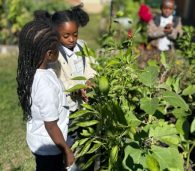
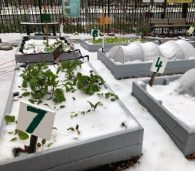
Twenty years ago, FRESHFARM FoodPrints began teaching 200 students at Rudolph Elementary in Ward 4. Today, it is an established, sought-after program that reaches 8,000 young learners across 21 Washington, DC public schools across the city. Students grow vegetables in school gardens, cook nutritious meals in modern teaching kitchens, and discover a joy in food that stays with them long after the school bell rings.
FRESHFARM co-founder Bernie Prince believed FoodPrints could change how kids relate to food. What she couldn’t have predicted was how far those ripples would travel: beyond the FoodPrints classroom, into students’ lives outside of school, teachers’ own kitchens, and families’ tables.
At Kimball Elementary, a FoodPrints partner school since 2016, those ripples are palpable. Kimball is one of the seven elementary schools that FoodPrints partners with in Wards 7 and 8, an area of the city where resources are stretched and access to hands-on food education matters even more.
For Students: Engagement and Growth
“Whenever I tell them we’re going to a FoodPrints class, my students are celebrating,” shares Monet Greene. When she began teaching 5th grade at Kimball two years ago, she didn’t need much convincing about FoodPrints. She just watched her students’ excitement as they walked through the door to the school’s teaching kitchen!
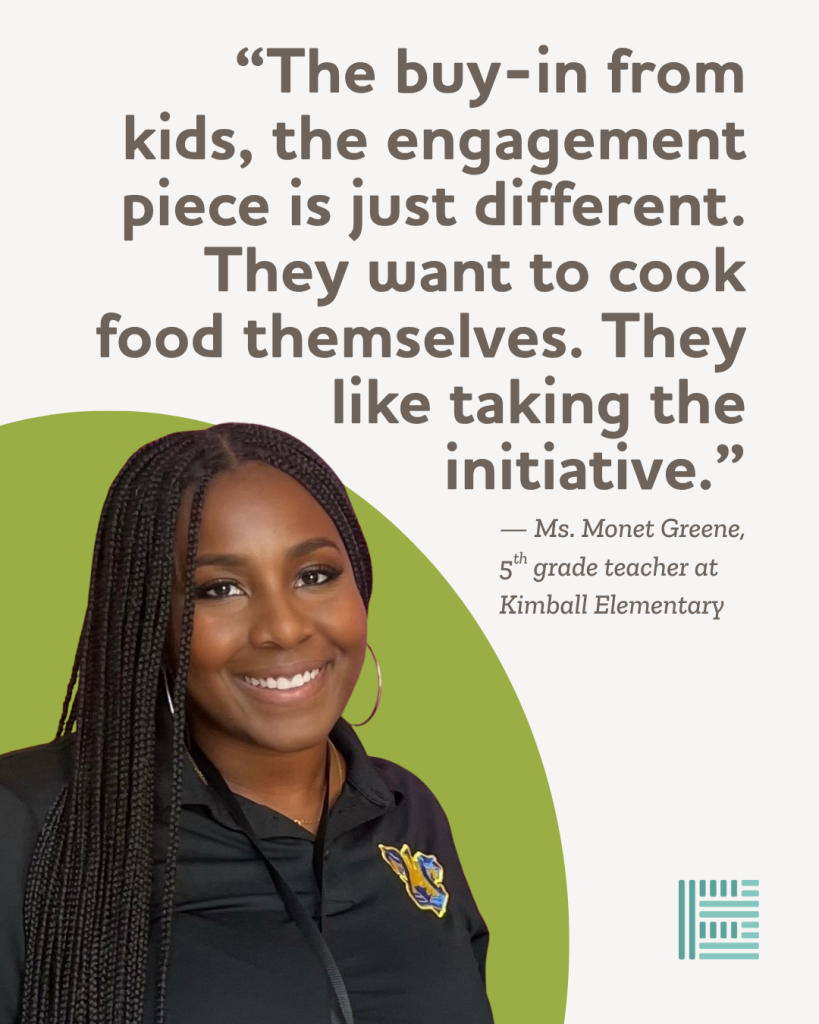 “The buy-in from kids, the engagement piece is just different,” she said as she reflected on her time at other schools without the program. “They want to cook food themselves. They like taking the initiative.”
What makes FoodPrints stick isn’t just the food, it’s how FoodPrints teachers creatively weave the schools’ curriculum into every lesson. Davette Wilson has been a FoodPrints Lead Teacher at Kimball for five years. In her classroom, students learn economics by buying vegetables with play money, and science by opening a pepper to count its seeds.
“How Ms. Wilson connects to what I’m already teaching helps reinforce it for my students,” Ms. Greene said. “I’ve also tried to add more reading into my own lessons, like Ms. Wilson does.”
That academic thread runs parallel to something harder to measure. Deon Bolden, who has taught at Kimball for 12 years, remembers one student who struggled with behavior and couldn’t quite find his footing. Then came FoodPrints, and Ms. Wilson.
“When we first went in, Ms. Wilson said to the student, ‘I love you, but we cannot act like that here.’ By her saying that, he opened up and calmed down,” Mr. Bolden recalled. Later that same class, faced with a plate of sweet potatoes, “The boy scrunched up his face. Ms. Wilson encouraged him to try just one bite. He did. Then he asked for seconds!” he added.
 Teachers Become Learners in the FoodPrints Classroom
FoodPrints doesn’t just teach students. It teaches teachers too, enriching their habits, health, and love for food.
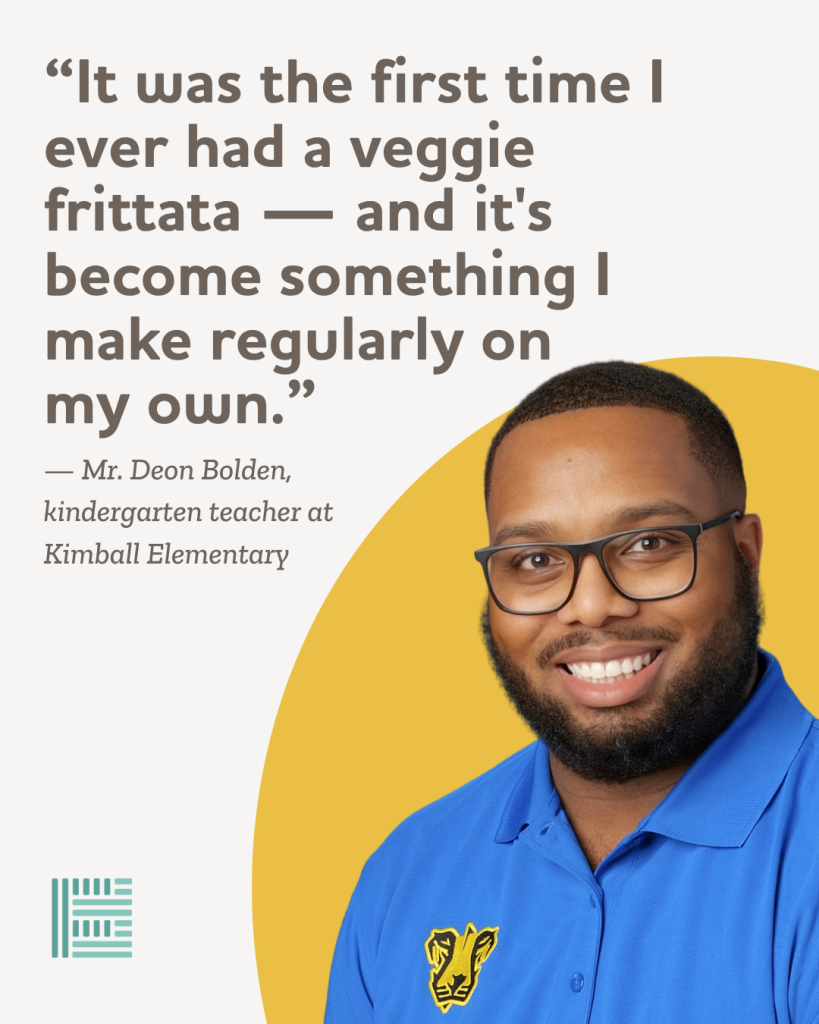
Mr. Bolden still remembers the day he learned to garden using a raised garden bed, and made his first veggie frittata. “It was the first time I ever had one. It’s become something I make regularly on my own.”
Ms. Greene had a similar awakening. The day Ms. Wilson made homemade tortillas and salsa with her class, she was inspired. “I made this recipe at home at least twice a week.”
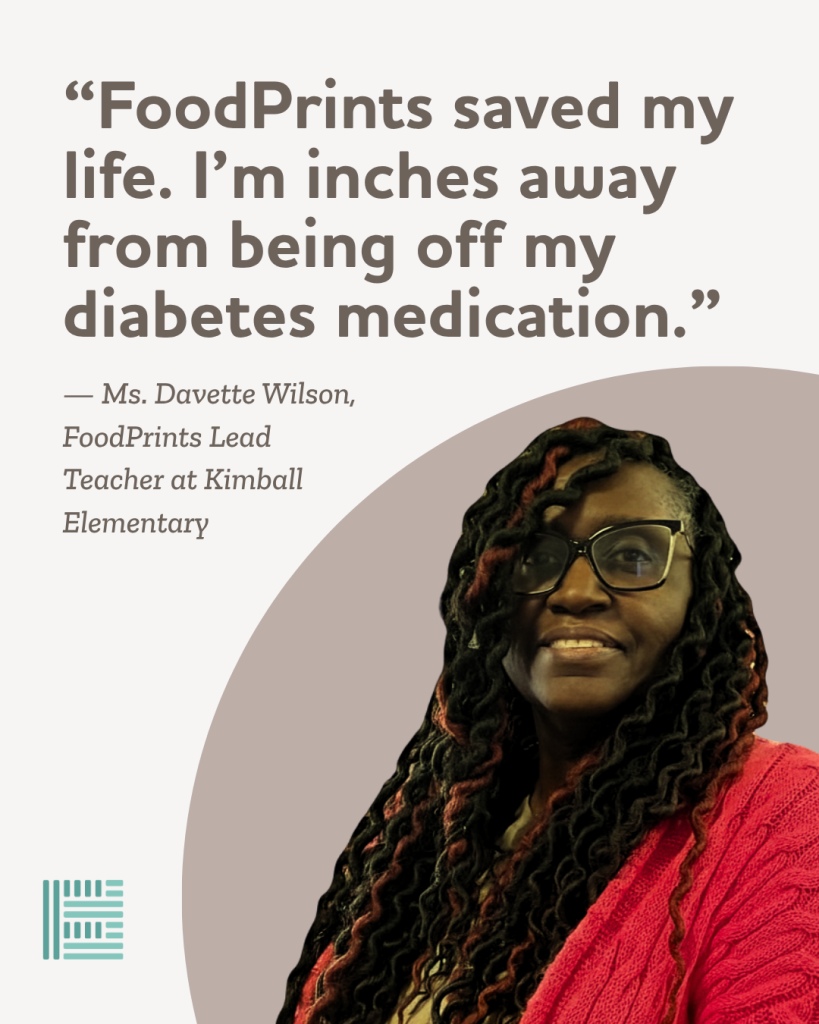
Ms. Wilson herself has been inspired by FoodPrints. “FoodPrints saved my life!” she said. “I’ve started to eat more fruits and vegetables and lost close to 100 pounds. My doctor recently told me that I’m inches away from being off my diabetes medication.”
A Program That Travels Home and Stays Through Adulthood
Ms. Wilson makes sure that the FoodPrints effect doesn’t stop at the school door. Under the mantra “when you teach the children, they go home and teach the parents,” Ms. Wilson teaches kids to reimagine leftovers and to creatively eat parsnips and rutabaga.
 Parent volunteers report watching hesitant kids take a small bite — nudged by a friend, surprised by the taste of something they helped make — and light up with pride. Some children have come home asking their parents to start a garden. Others have asked to cook FoodPrints recipes at home, or found FoodPrints to be a space where their ADHD feels less like a barrier.
This excitement permeates family routines around food and builds a desire for fresh produce. For many families, it’s also a doorway to food knowledge and skills they wouldn’t encounter otherwise.
The power of FoodPrints lasts beyond the school years; as students remember their experiences fondly, and choose and prepare more fresh, nutritious foods as young adults. “Because I started FoodPrints at such a young age, it’s ingrained into me, the type of foods you want to and should be eating — foods that are good for you and make a well-balanced plate,” an alumnus shared.
We celebrate FoodPrints’ first two decades benefitting our community and look forward to the next two decades of joyful food education.
Your support makes programs like FoodPrints possible. Make a gift to FRESHFARM today.