Why Buy Local?
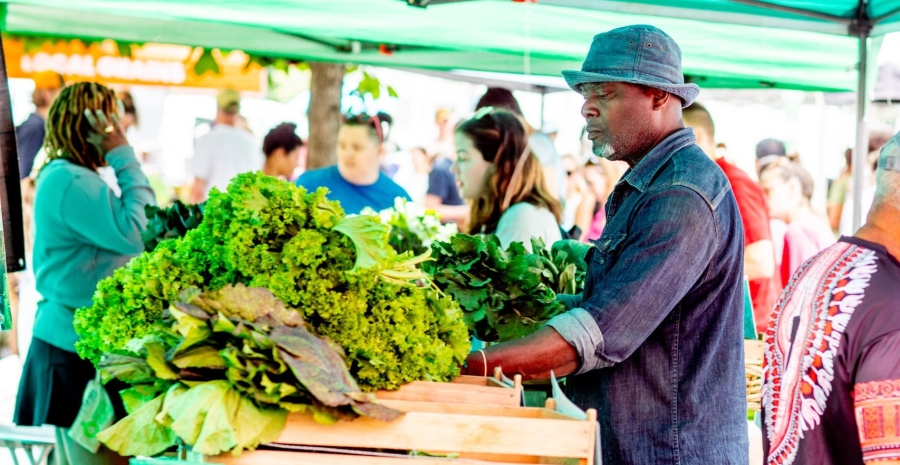
If you’re a regular farmers market shopper, you probably have a deep appreciation for the juicy flavor of a just-picked summer tomato, the crisp sweetness of a regional apple variety, and the fleeting joy of September’s pawpaws. These are experiences that can’t be replicated in a big-box grocery store. The farmers market is where all things local shine: produce is harvested at the peak of ripeness a day before or even the morning of the market; farmers travel mere hours, not days, to reach their customers; and fresh-picked items are handed straight from farmer to customer, without middlemen handling them along the way.
Buying local means your food is fresher, tastier, and more nutritious. But it also has a big impact on farmers and the planet — growers retain a larger percentage of their sales, and shopping local minimizes transportation costs and preserves regional farmland. Farmer Dana Boyle, whose family operates Garner’s Produce (Warsaw, VA), explains: “When I think about the importance of buying local, three things come to mind. It guarantees optimal freshness, which also delivers great tastes and nutrition. It directly supports the local economy and community. And finally, it reduces your carbon footprint; less transportation, fuel, packaging, storage, et cetera.” So whether you’re looking for the most delicious products available or want to reduce your environmental impact, you can’t go wrong by shopping local at the farmers market!
Why Buy Local: For Eaters
Fresher food means more nutrients
Most produce loses 30% of its nutrients within just three days of harvest.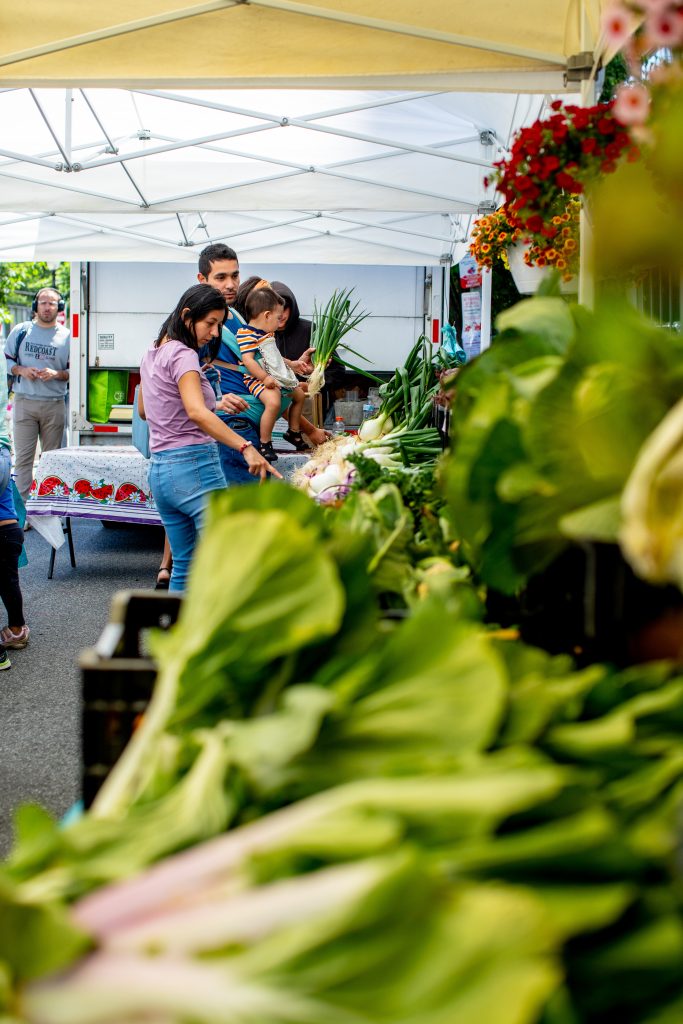 Produce in conventional supply chains can travel over 1,500 miles to reach a plate and is often picked unripe to survive the journey. Meanwhile, “[local] produce is fresher because it is usually harvested just a day or two before, which means better flavor and more nutrients,” says Elise Museles, nutrition and wellness expert and FRESHFARM board member. Farmers can bring more delicate, fragile crops to market — like heirloom tomatoes and specialty berries — that would not withstand a cross-country trip to reach a grocery store.
Superior taste
Conventional produce is often picked before it is fully ripe and then travels for several days to reach a grocery store. In contrast, local fruits and vegetables reach peak ripeness before harvest, and it shows in the flavor and texture. When choosing varieties to grow, growers can prioritize cultivars with the best flavor, rather than cultivars capable of withstanding transportation and long-term storage.
Our food system has a climate problem
The way we produce, process, and transport food is one of the largest drivers of greenhouse gas emissions in the US. Buying local shortens supply chains and reduces reliance on long-haul refrigerated transport, industrial processing, and excess packaging. What’s more, conventional crops are often grown with climate-intensive inputs such as fertilizer, pesticides, and irrigation to produce hardy crops with long shelf lives. Farmers selling to local markets can grow crops better adapted to their farm’s particular climate and ecosystem, focusing on varieties that thrive with fewer inputs.
Fewer hands, more transparency
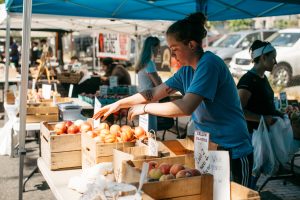
The longer the supply chain, the more opportunities for contamination, mislabeling, and loss of accountability and transparency. Widespread foodborne illness outbreaks are often attributed to a breakdown in safety at one of many steps in the supply chain, and it can be difficult to track down where along the chain an outbreak began. Local, short supply chains connect buyers directly to growers, so you know who grew your food and how. You can ask the person who grows your food directly about their practices and the protections they have in place to keep food safe.
Growing community
At their heart, farmers markets are about connection and community. Elise shares why she loves shopping at the farmers market: “The farmers market connects us to our food and the people who grow it. You get to know your farmers, ask questions, discover something new each week, and feel part of a welcoming community.” Farmer Marc Grossman of The Farm at Our House (Brookville, MD) concurs: “Shopping local links consumers directly to local farmers, building community and strengthening the economy.” The farmers market is not just a place to shop — it’s a place to meet your neighbors, know your farmers, and savor the best of what’s in season.
Why Buy Local: For Farmers
Farmers keep more of every dollar
In the conventional food system, farmers receive less than 12 cents of every dollar spent on food. The rest goes to processors, distributors, and retailers. In contrast, when you buy local at FRESHFARM markets or other direct-to-consumer retail outlets, farmers retain a much higher percentage of revenue, which flows back into their businesses and helps them continue operating. This is real money for real people. Marc notes that buying local “helps some of us pay for our kids’ college tuition.”
Buying local protects the land itself
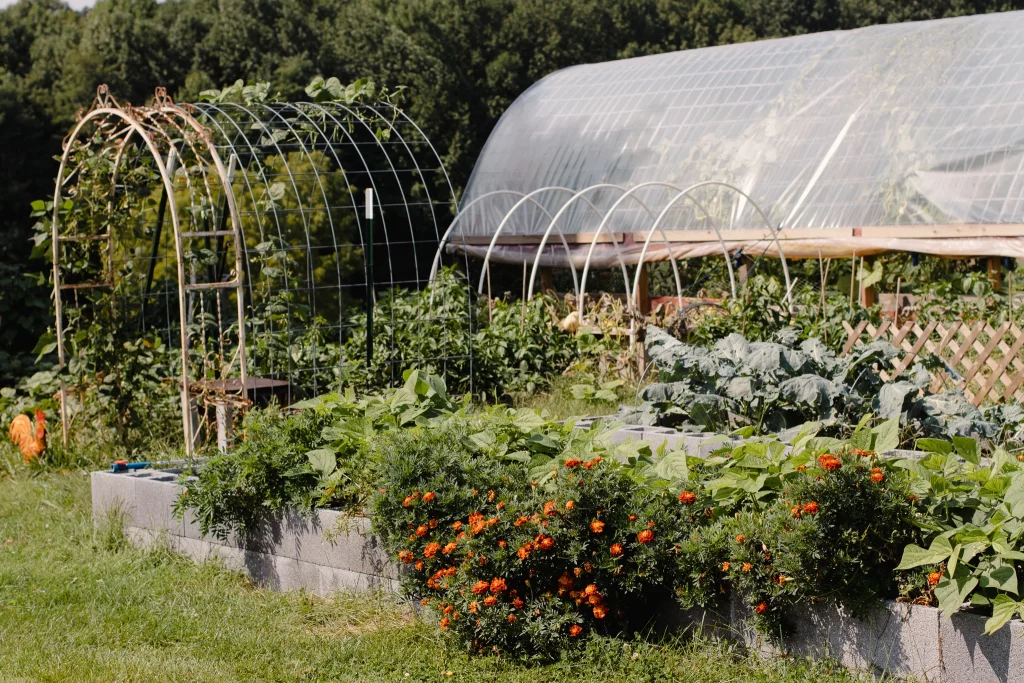
When farmers can’t make a living, their land often gets sold to developers, and farmland lost to development is gone forever. It cannot be recovered. Supporting local food is one of the most direct ways consumers can keep working land in production for future generations. What’s more, small- and mid-size fruit and vegetable farms work hard to keep their soil healthy and thriving, often prioritizing methods such as crop rotation to replenish nutrients, low use of inputs like fertilizers and pesticides, and low- and no-till cultivation. These practices preserve soil health, protect surrounding ecosystems, and ensure that farming is environmentally sustainable.
Local food grows local economies
Money spent on local food recirculates within the regional economy, supporting farm workers, local suppliers, and small businesses rather than flowing to distant companies. This process, known as the multiplier effect, occurs when local food spending is reinvested in the community — for example, in supplies, ingredients, or wages. Every dollar spent at a farmers market has an outsize impact on the local economy, with one study finding that “for every dollar of sales, direct marketers are generating twice as much economic activity within the region, as compared to producers who are not involved in direct marketing.” In addition to the economic activity that farmers and producers generate, farmers market shoppers often spend money at neighboring businesses on market days, boosting retailers in the community beyond the market itself.
Buying local means fresher food, healthier soil, and a farmer who gets to keep farming next season. So for your next grocery run, skip the produce aisle. Come join us at your nearest FRESHFARM market and enjoy all the local bounty the Mid-Atlantic region has to offer!