Winter Is Coming: Is Your Garden Ready?
If you are lucky enough to have access to a vegetable garden, you know it is at its peak in the warmer months, when tomatoes, zucchini, and eggplant flourish. But you can take steps in fall and winter to keep growing food and set it up for a strong spring. To help you winterize your garden, we checked in with urban farmer, edible landscaper, and FoodPrints Senior Garden Manager Ehren Vance for tips and tricks. The tips below are tailored to Washington, DC, and the surrounding areas. If you’re winterizing a garden outside the Mid-Atlantic region, look up your USDA Hardiness Zone and adjust accordingly.
FRESHFARM: What does winterizing the garden mean?
EV: Winterizing a garden means preparing it to stay productive throughout the winter months and jump-start spring growing. This includes removing spent annuals, pruning perennials, planting cold-tolerant crops, and caring for the soil to ensure fruitful future growing seasons. Trimmings from pruned perennials and cut-back annuals can go straight into the compost pile, where they’ll break down into nutrient-rich material to feed your garden next year. You can speed this process up by chopping up your trimmings as small as possible before adding them to your compost pile.
FRESHFARM: What steps can people take to winterize their gardens?
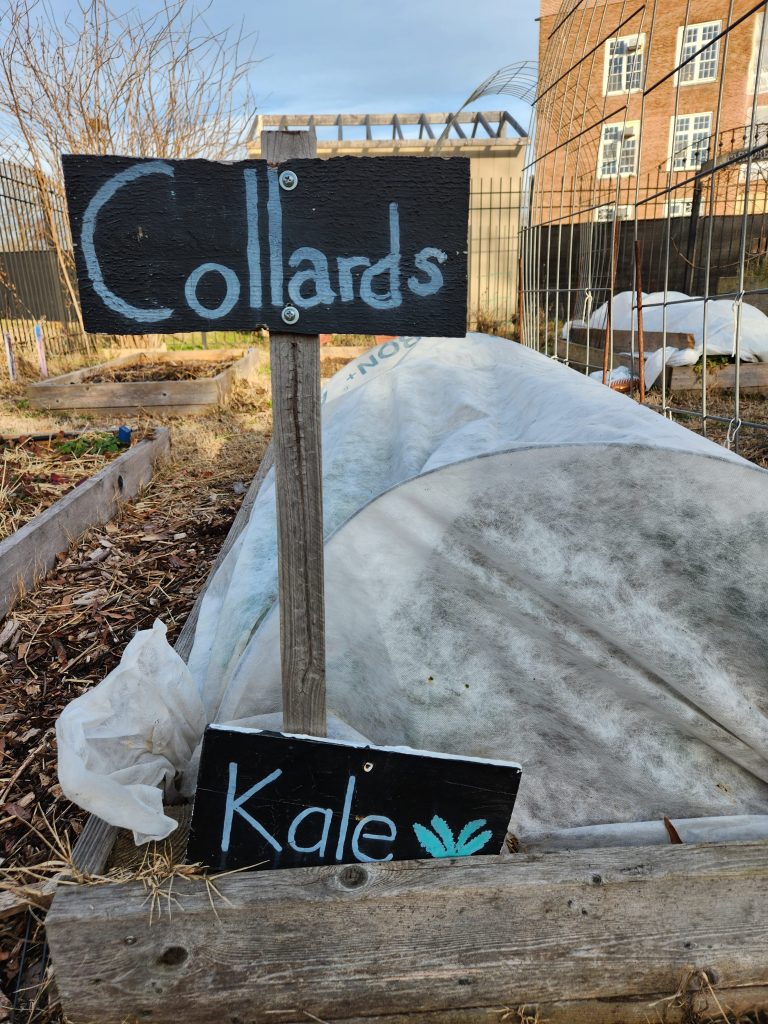 EV: If you want to keep growing — and we’ll get into cold weather crops in a bit — there are steps you can take to extend the growing season. You can add row cover or cold frames, which trap heat and block wind so the air and soil around your plants stay warmer than the open garden. These can buy you a few degrees of frost protection and add extra weeks (sometimes months) of growing time at both ends of the season.
Fall is a great time to add nutrients to your soil with compost, which can also do double duty as a light mulch, protecting the soil from getting too compacted if there’s a lot of snow. A final weeding before the cold sets in is also smart. This can prevent seeds from ending up in your beds and deny perennial weeds the chance to store energy in their roots for a strong spring comeback.
And you should absolutely plant cover crops, including winter rye, crimson clover, and winter peas! These plants will keep the soil healthy, weed-free, and nutrient-rich.
Finally, fall is also a good time to clean your equipment, including draining and cleaning any irrigation system you might have set up and storing filters/timers indoors to prevent freezing.
FRESHFARM: What can people grow and harvest in the fall and winter?
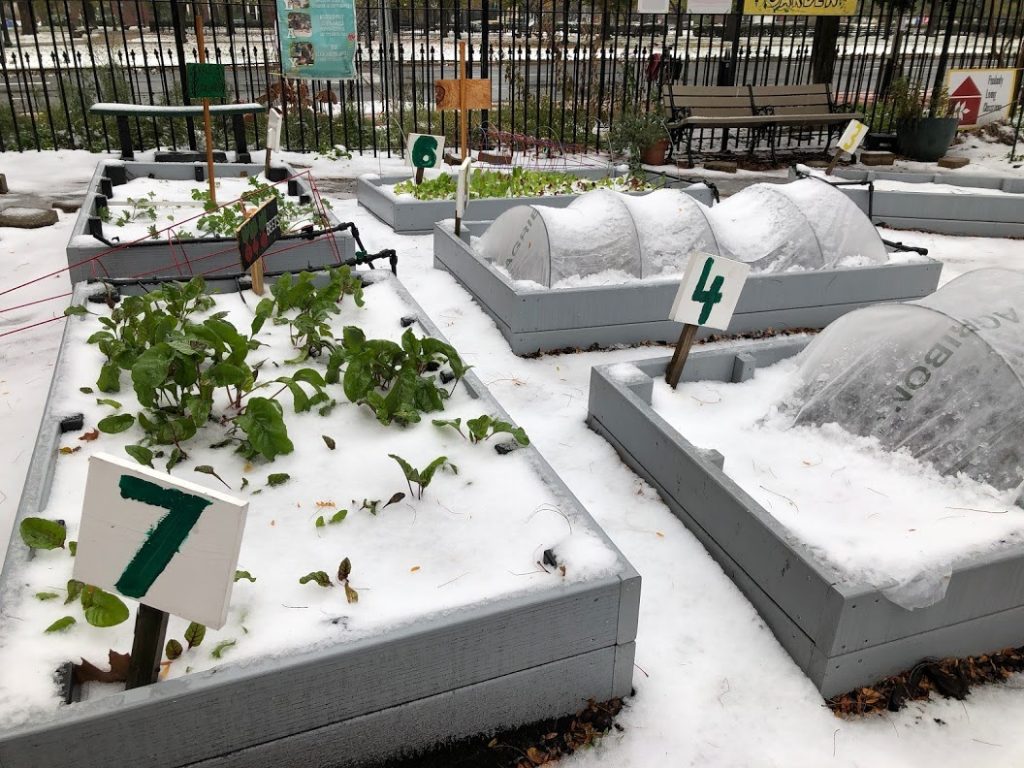 EV: Focus your fall and winter gardening on root crops and leafy greens. Veggies like carrots, beets, and parsnips will not only survive the winter, but also concentrate their sugars in freezing temperatures, leading to sweeter crops.
Most brassicas (kale, collards, tatsoi, etc.) are naturally winter-hardy. However, because growth slows down so much in the winter, heading brassicas (broccoli, cabbage, cauliflower, etc.) that don’t form a head before frost sets in will likely not form a head over winter — but you can still harvest their leaves just like you would for leafy brassicas like collards and kale.
Look for winter-hardy varieties of salad greens like lettuce and spinach. These are varieties that were bred specifically for fall and winter growing, so they are less susceptible to frost damage and still grow at a good pace despite the shorter days. Chard, a cousin of spinach, is a great year-round crop.
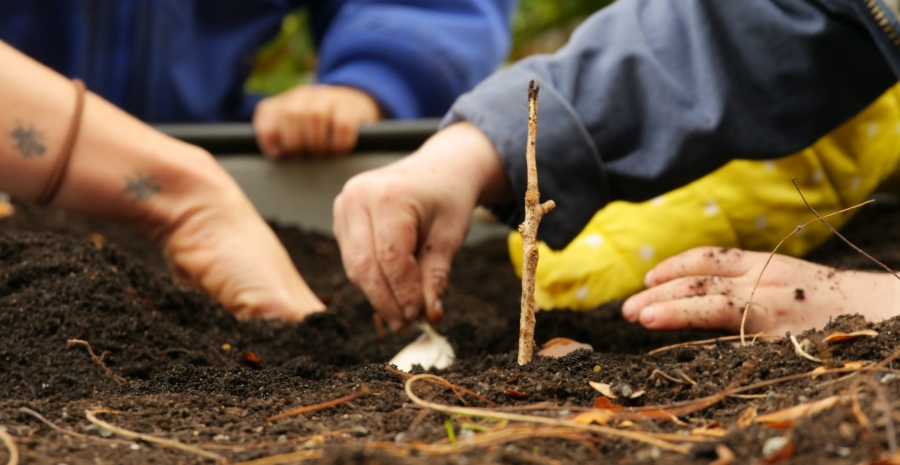
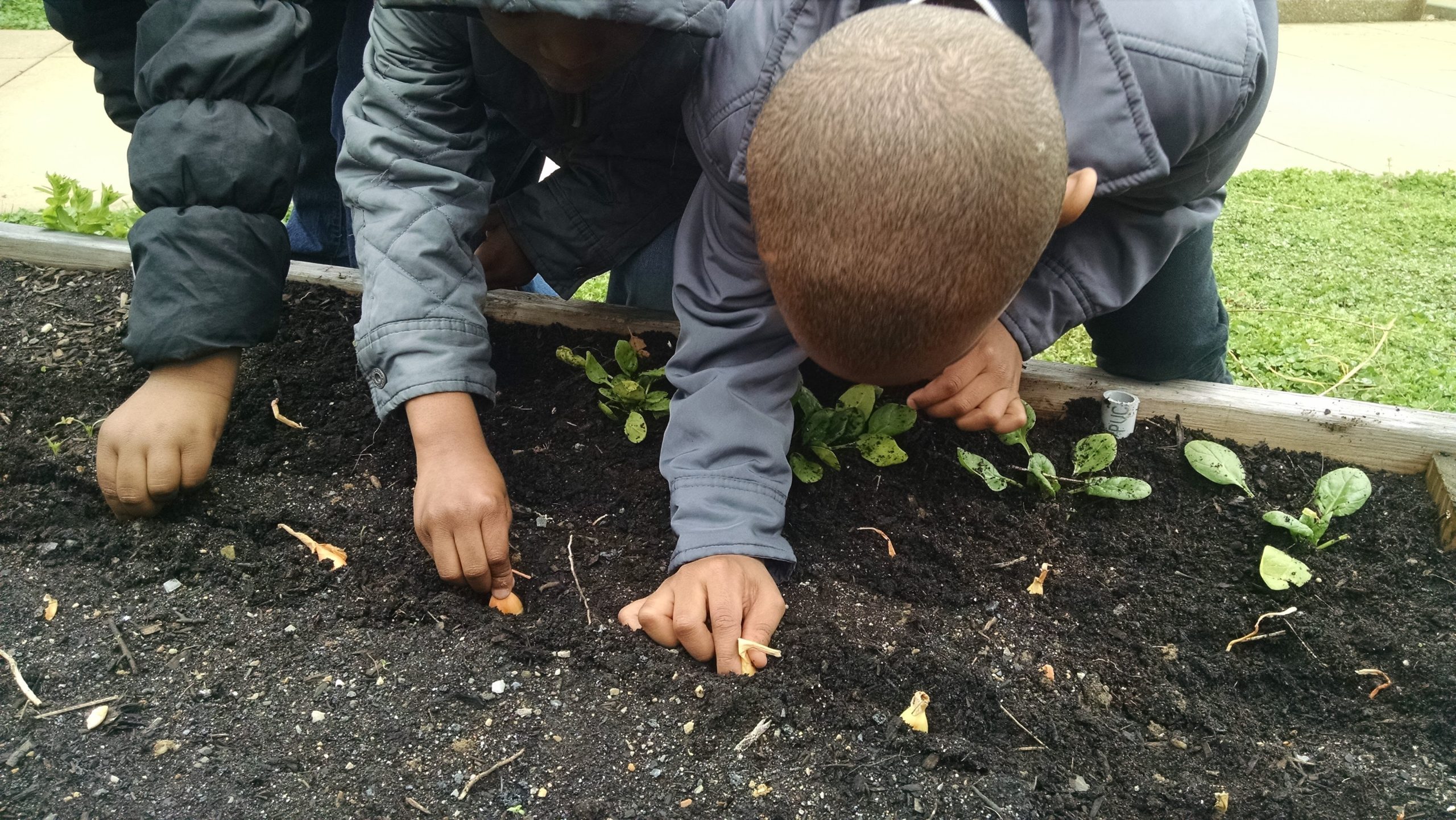 If you want to grow garlic, it MUST be planted in the fall (mid-to-late October) and harvested the following summer because garlic needs at least four weeks of cold temperatures to form a bulb that splits into multiple cloves; otherwise, you’ll get something known as “solo bulb garlic”! To grow garlic, break up a garlic head and plant individual cloves two inches deep and six inches apart, pointy side up, then cover them with soil and mulch. The garlic plants will emerge in the spring, and you’ll want to cut back the scapes (save them for pesto) so the plant can redirect energy to the root and grow into a fat bulb.
FRESHFARM: How should you care for perennial herbs (thyme, sage, rosemary, chives, mint, oregano) and what can you do if an herb has taken over?
EV: Herbs like mint, thyme, oregano, and chives that are generally green throughout the plant should be cut back fairly aggressively (a few inches above the soil) and mulched. For shrubby herbs like rosemary, prune down to just a few inches above where the stem transitions from green and leafy to brown and bare. If you prune woody, brown, bare stems, you won’t get new growth in that area, so use this only for branches you want to remove completely, like scraggly, unsightly stems near the base of the plant. Mint, oregano, and marjoram can spread; dig up clumps of herbs that have taken over areas of the garden where you don’t want them. You can re-pot them and give them to friends or dry them for later use!
FRESHFARM: How can gardens help support pollinators over the winter?
EV: Leave dead plant stalks standing for hibernating native insects rather than cutting them back. Leave any plants that grow berries in the winter and seed heads alone to feed birds and other wildlife throughout the winter. Finally, apply leaf mulch to beds and perennial and pollinator garden patches to feed the soil and provide winter shelter for beneficial insects.