John Francis Student Advocates for FoodPrints
“FoodPrints teaches us that things take time. We grow things and care for the plants, then we pick them and prepare them into foods that we can eat together. And whatever we don’t eat goes into the compost. It’s a full cycle! And it takes time and patience. Just like life.”
This winter, FRESHFARM reached out to stakeholders across the city to see who might be open to sharing their experiences in our hands-on food education program with city leaders. Many parents and teachers wrote letters to the Mayor and City Council, but John Francis Education Campus student Graham Kelly asked his parents if he could testify to DC Council to advocate in person for continued funding for FoodPrints at his school and at other elementary schools across DC.
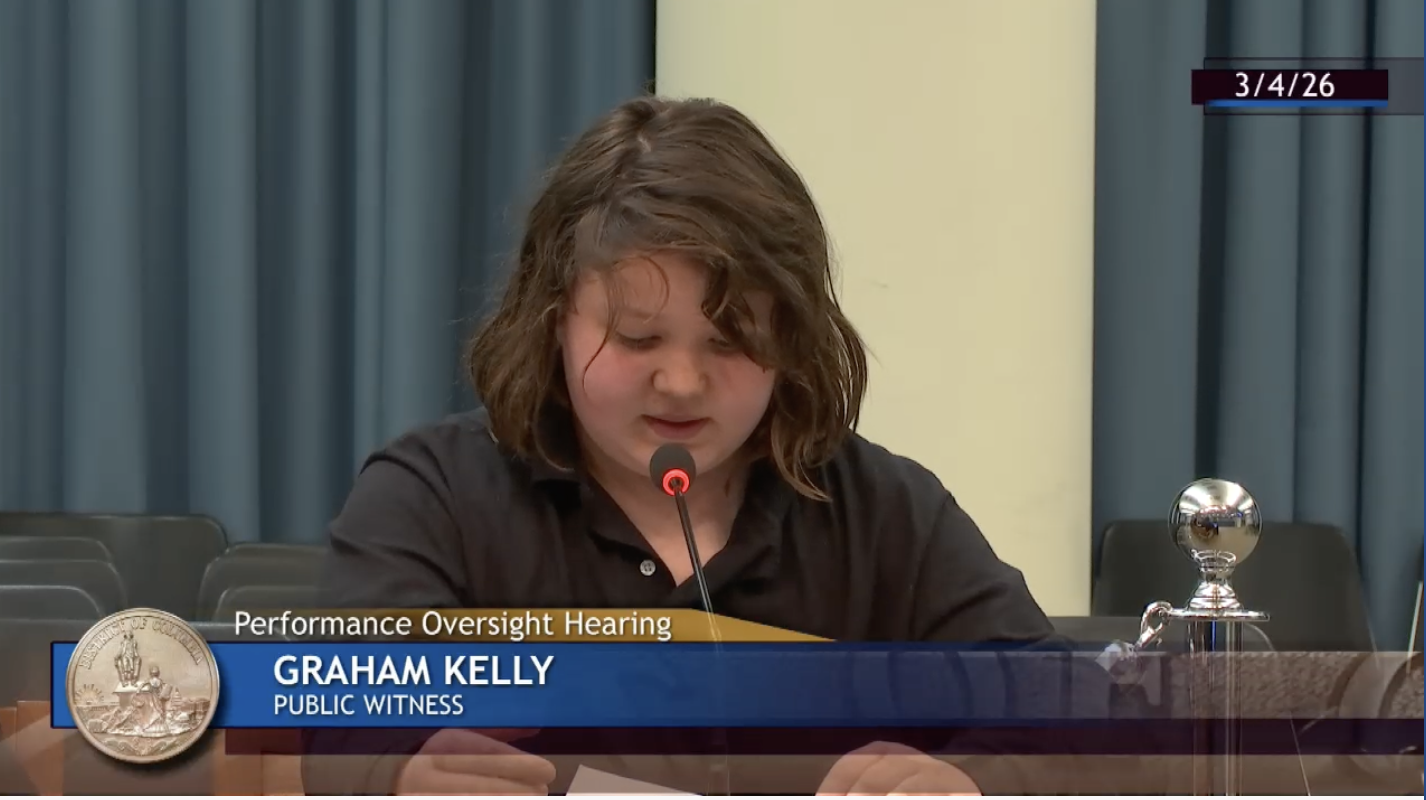
We are so proud of this outspoken 5th-grader, whose time in our program has discovered new spices and recipes—and a lifelong love of kale. His insights into what skills he and his peers continue to learn in our teaching kitchens and school gardens make our hearts smile. Many thanks to this young advocate, whose full testimony is below.
My name is Graham Kelly and I am in the 5th grade at John Francis Education Campus in Ward 2. I also live in Ward 2.
I am here to talk about the FRESHFARM FoodPrints program. I have been doing FoodPrints at Francis since I was in 1st grade. I remember making ABC salad in that grade, and that day I took the recipe home to my parents and we made it the very next day and all my family loved it. I even shared it with my grandparents.
Over the years, I learned about a couple of spices that I like. There’s a specific kind of chili flakes I learned to love here in FoodPrints—Korean chili flakes. I use them in a lot of recipes, including my family’s recipes.
But my favorite thing about FoodPrints is kale. I like kale because I love the leafy flavor of it and it goes great in smoothies. FoodPrints taught me to love kale. So now I eat kale chips. My favorite recipe is the kale salad, which was amazing. There was some garlic in the dressing, it complements the kale so well—everything complements the kale well. The best thing that complements kale is more kale.
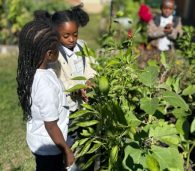
FoodPrints is important to my school because everyone at our school absolutely loves FoodPrints. After a while, it’s become part of the culture of our school, school is no longer complete without FoodPrints. Everyone here loves the gardening, the cooking, and the teachers at FoodPrints have become like other teachers at school. And, yeah, FoodPrints ties into other things I’m learning at school.
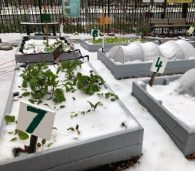
FoodPrints is important to my learning, just like math and ELA classes. You learn so much in one FoodPrints class, including things like nutrition that you don’t learn in other classes. It gives you culinary experience. At home there might not be much diversity in what you eat, but in FoodPrints we sometimes make chili, sometimes salads, sometimes baked things. You can learn about cooking and gardening all in one place: why pollinators are important, you learn about the garden ecosystem, how to measure things (which goes into math), how to read recipes (which is ELA), and food science (which is, of course, science); these all tie back into your classes. And you get to eat a treat at the end which you made yourself.
One final thing you should know about FoodPrints is that it teaches us that things take time. We grow things and care for the plants, then we pick them and prepare them into foods that we can eat together. And whatever we don’t eat goes into the compost. It’s a full cycle! And it takes time and patience. Just like life.
Thank you to the Mayor, City Council, and OSSE for helping students at John Francis and many more schools across DC be able to participate in FoodPrints.
Graham Kelly
Student at John Francis Education Campus
Testimony to the DC Council Committee of the Whole and Committee
Office of the State Superintendent of Education Oversight Hearing
March 4, 2026