How the FRESHFARM Food Hub Extends the Reach of Local Farmers
On a humid Tuesday morning, farmers begin unloading crates of colorful produce onto the CityCenterDC plaza. In the coming hours, local food producers will join them and transform the site into a bustling lunch-hour farmers market. Office workers will step out of their offices to grab a hot lunch of fresh pizza, empanadas, or borek. Nearby residents will pick up ingredients for their dinner from the vast produce selection. But by nightfall, the produce here will have reached even farther than the homes of market patrons. This is the work of the FRESHFARM Food Hub.
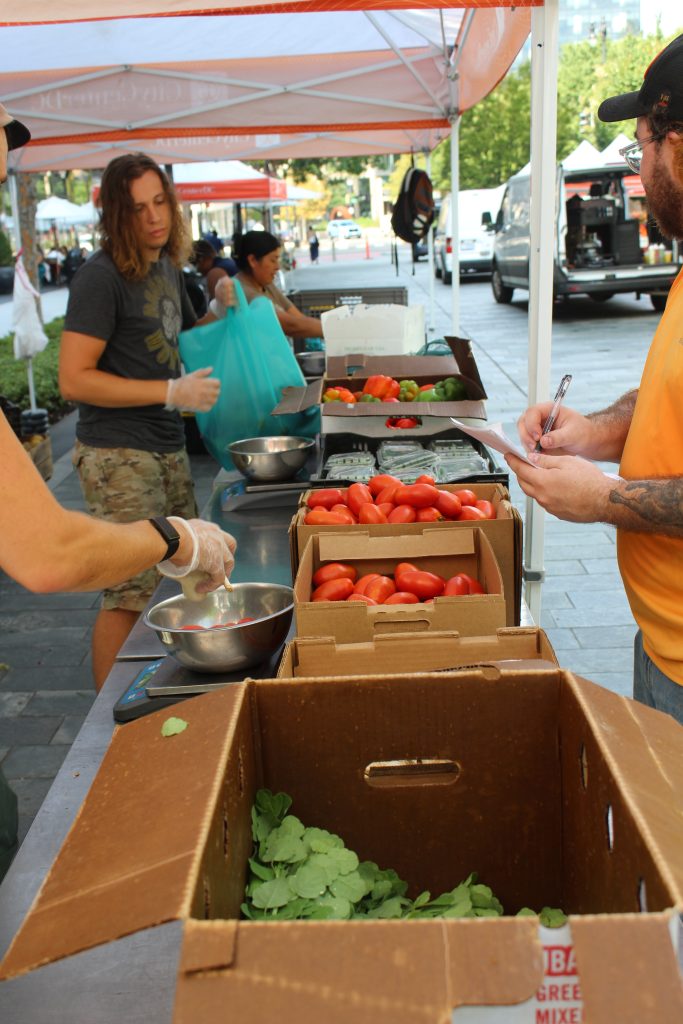 Formerly known as the Pop-Up Food Hub, today’s operation is reminiscent of its original namesake — the Food Hub team arrives soon after the farmers and sets up three pop-up tents to work under. The team unloads produce from Barajas Produce and Mickley’s Orchard and begins sorting fruits and vegetables into a series of partner orders.
On this Tuesday, produce from the two farms will serve both the farmers market shoppers arriving later in the morning and Food Hub partners across the city. The trucks carrying sweet corn, fresh herbs, apples, tomatoes, and other seasonal produce will make the trip from farm to city just once before the fruits and veggies continue on to their final destinations.
Easing Logistics for Local Farmers
For farms like Barajas Produce and Mickley’s Orchard, a trip to Washington, DC, is a significant undertaking and almost always involves traffic. Barajas Produce travels 67 miles from Colonial Beach, VA, while Mickley’s Orchard travels 95 miles from Biglerville, PA. Rather than farmers making multiple deliveries to the city, by handling sorting, packing, and final-mile delivery the Food Hub allows these farmers to sell more in the same trip.
Elda Barajas explains that consistent orders from the Food Hub help make Barajas’ trip into the city worthwhile. “After COVID, foot traffic dropped a lot because people weren’t working in offices. Thankfully, attendance has been getting better every year, but bringing in our Food Hub order is the main reason that we can continue to come to this market,” Elda says.
For Bill Mickley, the Food Hub also expands the number of people who can enjoy his fruits and vegetables. “In addition to helping with our bottom line, selling with the Food Hub also makes sure that Mickley’s produce is accessible to people who normally wouldn’t be able to get it,” Bill notes.
Low-Infrastructure, People-Powered
Once the produce is received, the six-person Food Hub team springs into action. They sort and pack hundreds of pounds of produce into orders for seven different destinations. Some partners, like health clinics, order pre-packed bags containing a variety of fruits and vegetables, while others order produce in bulk for church food pantries or school cafeterias. For bag orders, the Food Hub works with partners to set a budget and then curates the contents based on what each farm has available.
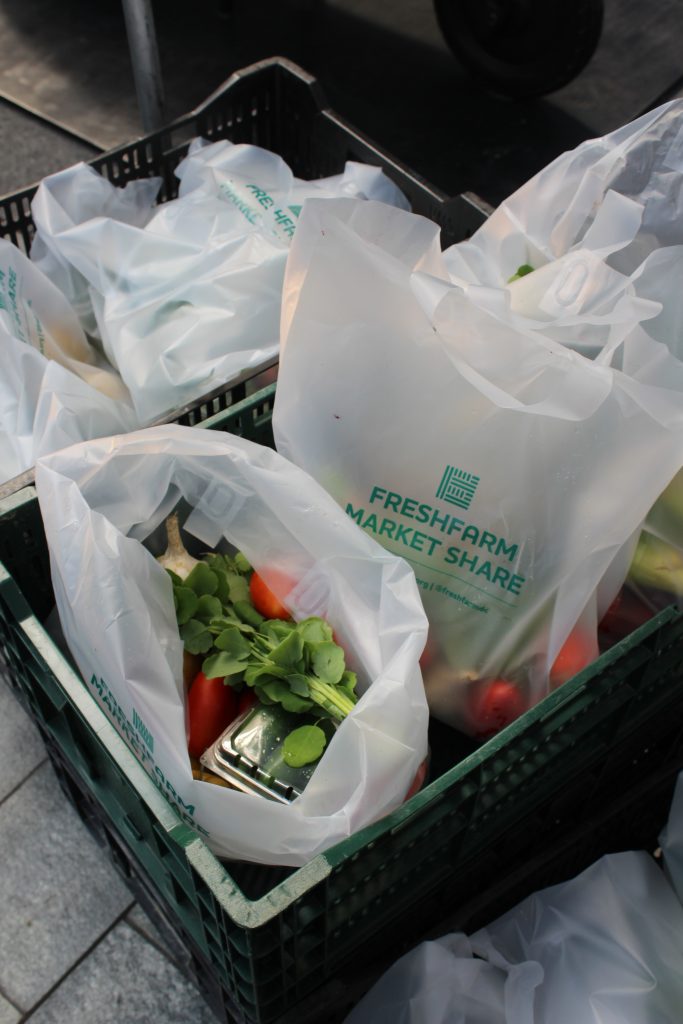 First up are Market Share bags, FRESHFARM’s flexible CSA-style program. Each week, subscribers pick up a bag filled with fresh produce in either Personal or Family size. The bags packed this morning will head to subscribers at CityCenterDC, the Whittier Elementary Farm Stand, and a private partner site.
Next come bags packed for Produce Plus participants. While the Produce Plus program is usually administered via a $40 preloaded card that gives participants the flexibility to shop on their own at farmers markets, these bags are headed to a senior center whose residents are homebound and cannot shop themselves.
Alongside the bag-packing line, several wholesale orders are being assembled for an early childhood education center, a mutual aid organization, and two FoodPrints Back-to-School Nights at DCPS elementary schools. The FoodPrints orders will help introduce students and families to the fresh, local food they’ll encounter throughout the school year.
The result is a surprisingly varied set of recipients for one farmers market: CSA customers, seniors, young children, FoodPrints families, and more will enjoy this late August harvest.
Shortening Time From Field to Fridge
Operations this Tuesday move quickly. Farmers arrive at 9am, the Food Hub team begins their work at 9:30am, and by 12pm, two FRESHFARM vehicles are loaded with the various orders. When it comes to fresh food, speed is paramount. Today, much of the produce is less than 48 hours from the field by the time the Food Hub receives it, and some of the most delicate items have been harvested within 24 hours of final delivery.
Consider the path of a bunch of fresh herbs. Harvested on a Mid-Atlantic farm, the herbs travel into Washington just hours after being picked. After arriving, the Food Hub team sorts and packs them into a partner order. By noon, they are loaded into a FRESHFARM vehicle and headed to their final destination — all without the farmer having to make another delivery.
The Food Hub makes this process possible without requiring each farmer to manage their own wholesale deliveries. Because FRESHFARM receives the orders at the farmers market, sorts and packs them, and handles the last leg of the journey, farmers can maximize their trips into the metro area and focus on farming.
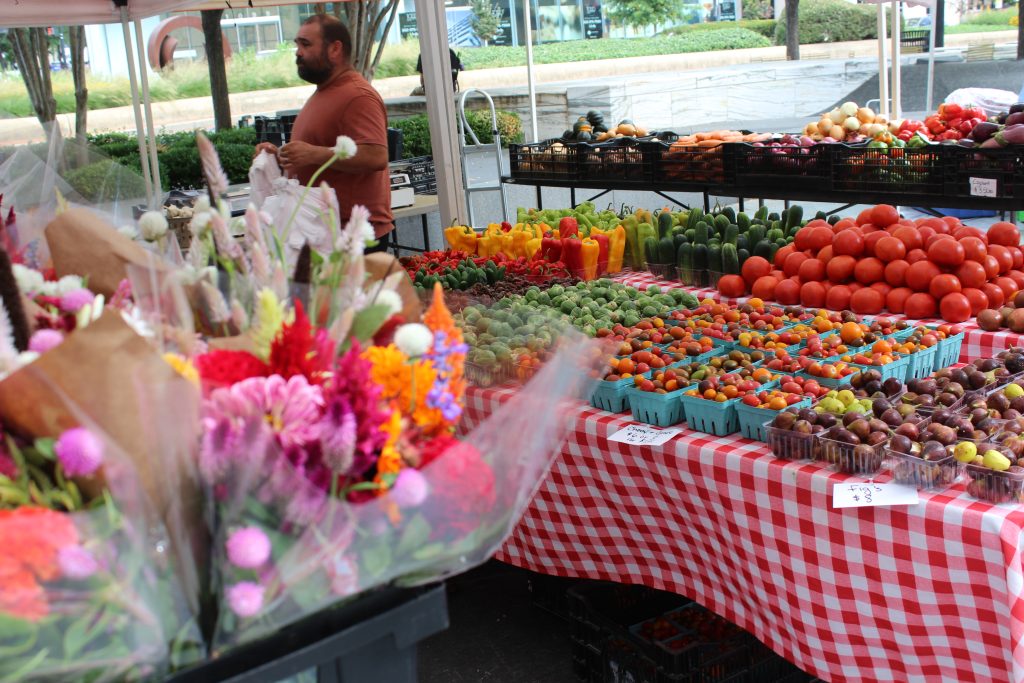 As the FRESHFARM CityCenterDC Market comes into full swing, the Food Hub’s work is already moving beyond the plaza. Market shoppers will spend the next few hours buying produce, flowers, prepared foods, and lunch from the farmers and producers who made the trip into the city. Meanwhile, hundreds of pounds of produce from those same farmers will already be on its way to seven other destinations.
By evening, the Food Hub’s operations will be long finished, and the produce will be in the hands of the people and organizations it was packed for just that morning.