FRESHFARM Food Hub: 2025 Impact and a New Name for the Future
2025 Successes for the FRESHFARM Food Hub
2025 was a record-breaking year for the FRESHFARM Food Hub. After nearly doubling total sales from 2023 to 2024, the Food Hub reached a new high in 2025, distributing $1.2 million in local produce and grains across the region.
These purchases supported 48 small and mid-sized local farms, nearly 19% of which are Black- or Brown-owned. Notably, 66% of total purchase dollars went to farmers who identify as Black or Brown, representing a meaningful and intentional investment in farmers who have traditionally been excluded from agriculture.
On the distribution side, the Food Hub partnered with 26 nonprofit organizations to deliver locally grown food to 89 unique sites throughout Washington, DC, Maryland, and Virginia. Nonprofit partners accounted for 70% of total Food Hub sales, underscoring the program’s role in strengthening community-based food access and supporting the people these nonprofits serve.
In 2025, the Food Hub also distributed 8,764 Market Share CSA bags, with 35% purchased by customers using SNAP benefits, helping ensure fresh, local food remains accessible to households at all income levels.
Our New Name: The FRESHFARM Food Hub
As we look ahead to the 2026 season, we are excited to share an important update: this program will now be known as the FRESHFARM Food Hub, rather than the Pop-Up Food Hub.
Originally launched by Community Foodworks in 2016 as the Pop-Up Food Hub, the program became the FRESHFARM Pop-Up Food Hub following the merger of FRESHFARM and Community Foodworks in October 2019. As the program has grown in size, reach, and impact, this name change better reflects the vital role the Food Hub plays in FRESHFARM’s mission of strengthening the Mid-Atlantic food system and our long-term commitment to farmers and communities across the DC metro area.
Connecting Farmers to Communities at Scale
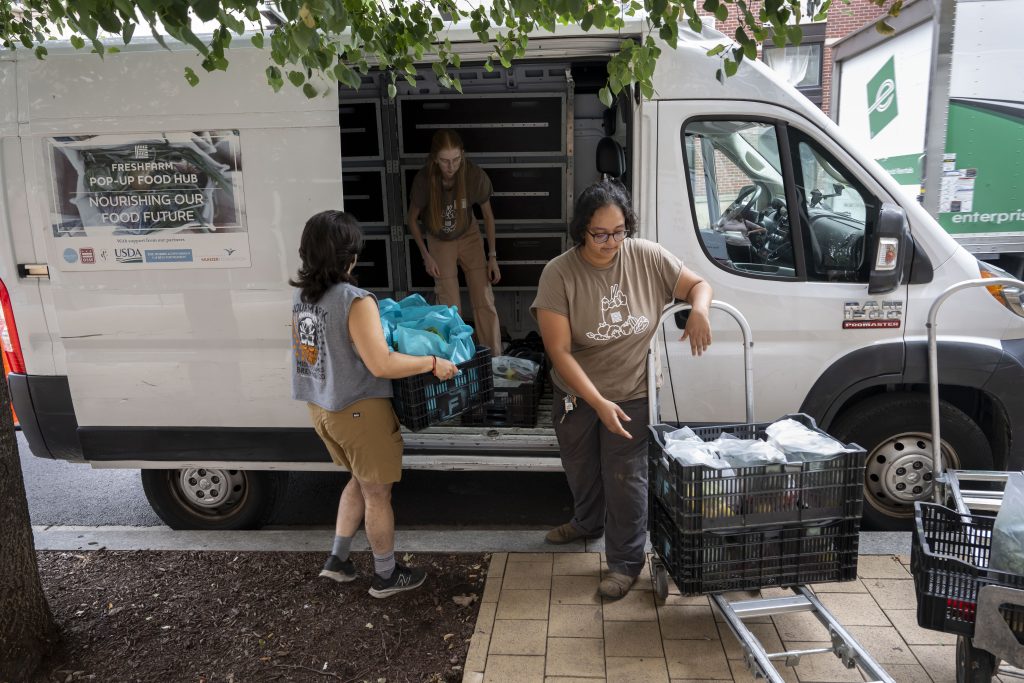
The FRESHFARM Food Hub connects small- and mid-sized local farmers directly with communities that have historically lacked access to fresh, local food. Built on the strength of FRESHFARM’s farmers market network, the Food Hub creates wholesale pathways that allow farmers, especially farmers of color and other under-represented groups, to reach underserved individuals and community organizations at scale.
The Food Hub offers wholesale pricing, with no minimum order size and a $5 delivery fee, regardless of order size. This pricing structure makes the Food Hub accessible to a wide range of partners, including nonprofit organizations such as churches, health clinics, and schools. A home-based Early Childhood Education center ordering for a small group of children can access the same services, produce, and prices as a Virginia-based food bank serving thousands. Since 2016, we have refined and scaled this model to support our network of Mid-Atlantic farmers with reliable new revenue streams at fair market prices while providing a growing customer base with consistent access to high-quality, locally grown produce.
From Pop-Up Roots to a Flexible Distribution Model
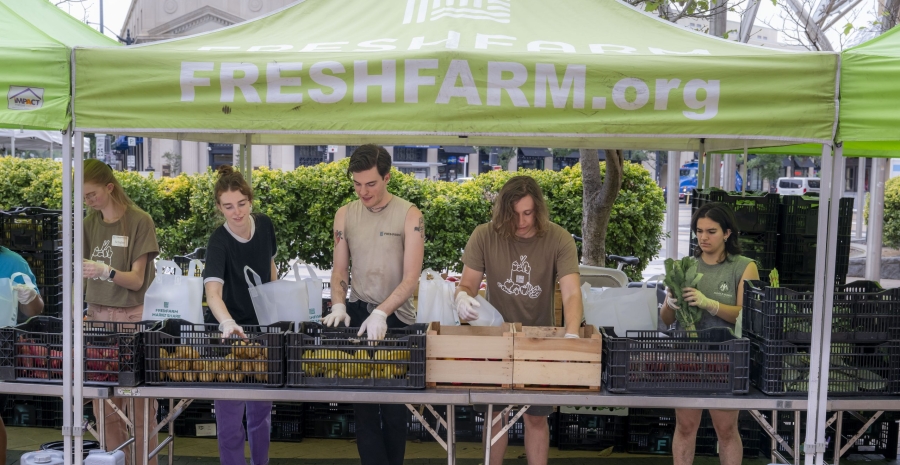
The Food Hub began as a true “pop-up” model: receiving, aggregating, and re-packing produce under tents at FRESHFARM farmers markets. While markets remain central to our operations, the program has evolved to include a small warehouse where produce can be received directly from farmers, packed indoors, and stored in cold storage.
This added infrastructure allows for greater flexibility in what we offer to wholesale and Market Share CSA customers and enables year-round operations, including during the winter months when many of our farmers markets are closed. At the same time, the pop-up model remains fundamental to our approach, allowing the Food Hub to stay nimble, responsive, and rooted in the market communities we serve.
Looking Ahead: Building on 2025 Momentum
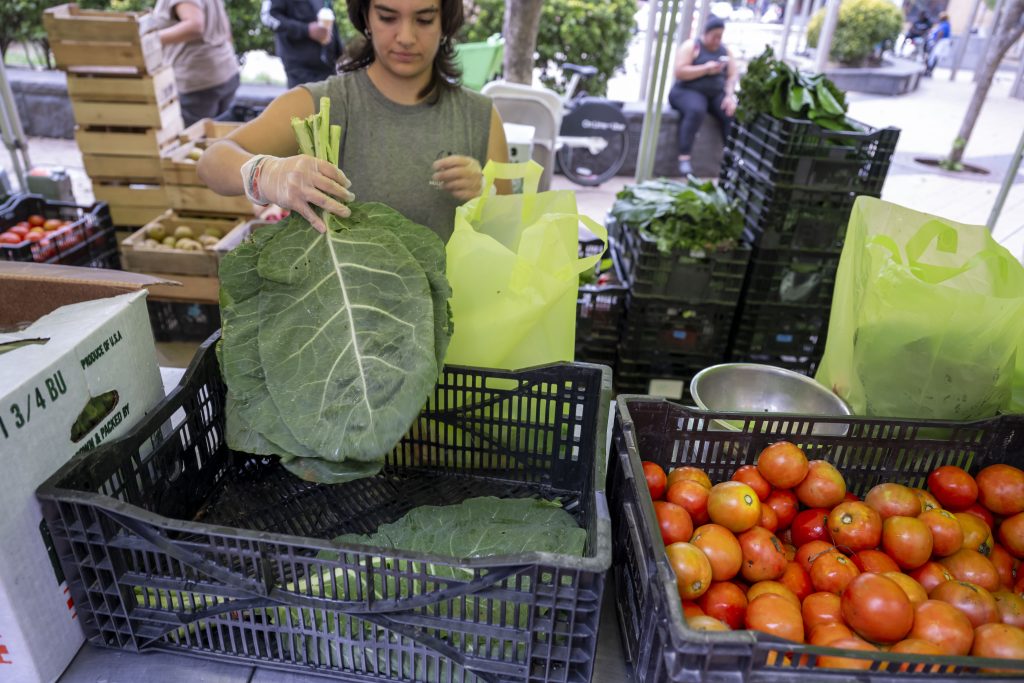 As we close out an exceptional year, the transition to the FRESHFARM Food Hub marks more than a name change—it reflects how far this program has come and where it’s headed next. In 2025, the Food Hub strengthened economic opportunities for local farmers, increased access to fresh food for thousands of families, and demonstrated the power of community-centered food systems.
Heading into 2026, we are energized to build on this momentum and deepen our support for farmers of color, expand partnerships with community organizations, and continue to grow a Food Hub that delivers lasting impact across the Mid-Atlantic region.